Pothos has a reputation as the plant you can’t kill. Mostly deserved — but “hard to kill” and “thriving” are two different things, and the gap between them is where most people get stuck. Yellow leaves, bare stems, vines that grow long and sad with three inches between each leaf.
Good pothos care comes down to three things: light that’s brighter than you think, water that’s less frequent than you think, and a pot that drains. Get those right and this plant will run 10 feet along a bookshelf and ask for almost nothing. Here’s what actually matters, and how to fix a plant that’s already sulking.
Table of Contents
- Pothos Care Basics: What This Plant Needs
- Light: The One Thing Most People Get Wrong
- Watering Without Root Rot
- Soil, Fertilizer, and Repotting
- 6 Common Pothos Mistakes and How to Fix Them
- Pothos Varieties Compared
- Pothos and Pets
- Frequently Asked Questions
Key Takeaways
- Pothos does best in filtered light, high humidity, and temperatures between 70 and 90°F. It won’t tolerate much direct sun.
- Water only when the soil surface is dry. Overwatering is the number one cause of root rot in pothos.
- Low light causes variegated types to lose their color and revert to plain green.
- Fertilize every other month, and skip it entirely in winter when the plant isn’t growing.
- All parts of the plant are toxic to cats and dogs, and the sap can irritate skin.
Pothos Care Basics: What This Plant Needs
Pothos (Epipremnum aureum), also sold as devil’s ivy or golden pothos, is one of the most popular houseplants in North America for a reason. It’s an evergreen climber from Southeast Asia whose stems run up to 65 feet in the wild. It’s only hardy outdoors in USDA Zones 10 through 12, so unless you’re in South Florida, coastal Southern California, or Hawaii, yours lives indoors year-round.
The short version of pothos care: filtered light, warm room, water when the top of the soil dries out, and a growing medium that’s well aerated. University of Wisconsin Extension puts the ideal range at 70 to 90°F with high humidity, and says to keep plants out of drafts. If yours sits by a drafty window in January or under an AC vent in July, fix that before you change anything else.
Light: The One Thing Most People Get Wrong
Pothos is genuinely tolerant of low light — that’s why it ends up in windowless offices. But tolerating and thriving aren’t the same thing, and low light has a visible cost: variegated pothos loses its variegation. The white and gold marbling fades toward plain green, and new leaves come in smaller. If your Marble Queen is slowly turning into a Jade, it needs more light, not more water.
How much light is “enough”
Clemson Cooperative Extension measures indoor light in foot-candles, and the numbers are humbling. A well-lit home interior often sits under 100 foot-candles; a clear sunny day outdoors exceeds 10,000. Their guidance:
- Low light: 100 ft-c minimum, 75 to 200 preferred
- Medium light: 100 to 150 ft-c minimum, 200 to 500 preferred
- Roughly 100 ft-c for 12 hours a day is what it takes just to maintain a plant’s quality over a year
- At least 200 ft-c for 12 hours a day before a foliage plant gets any real benefit from fertilizer
That last point is the one people miss. Feeding a plant in a dim corner doesn’t help it — there isn’t enough light for it to use the nutrients.
Aim for bright, indirect light: a few feet back from an east or north window, further back from a south or west one. Direct afternoon sun through glass will scorch the leaves.
Watering Without Root Rot
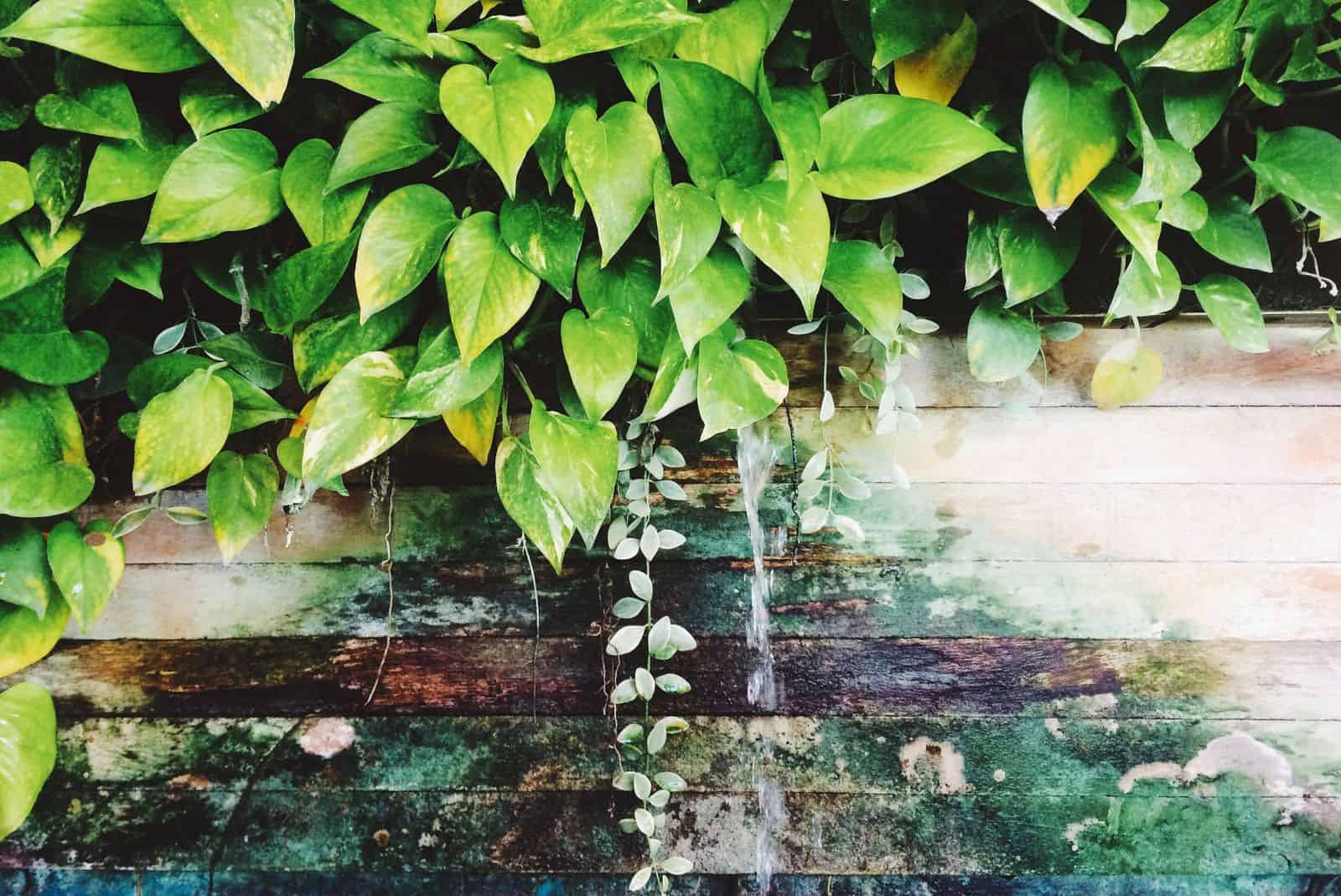
The rule is simpler than most advice makes it: water only when the soil surface is dry. Stick a finger in about an inch. Dry? Water thoroughly until it runs from the drainage hole, then empty the saucer. Still damp? Wait.
Root rot is the most common serious problem here, and Wisconsin Extension is blunt about the cause — it’s most often due to overwatering. Missouri Botanical Garden flags the same risk with poorly drained soils. Symptoms are brown, mushy roots, or no roots at all.
Blackened leaf margins and tips are a separate, annoyingly ambiguous signal. They can mean overwatering, underwatering, or fertilizer salt buildup. If you’ve been feeding regularly, flush the pot with plain water and let it drain fully before you assume it’s a watering problem.
Frequency changes with the season. A pothos in a warm, bright spot in July might want water weekly; the same plant in a cool, dim January room might go three weeks. Check the soil, not the calendar.
Soil, Fertilizer, and Repotting
Use a well-aerated potting mix — standard indoor potting soil with a handful of perlite works fine. The pot must have a drainage hole. No exceptions, no “layer of rocks at the bottom” workaround.
Fertilizer: every other month in spring, summer, and early fall, at the label rate. Stop in winter. Feeding a plant that isn’t growing just builds up salts, which is what causes those blackened leaf tips.
Repotting: pothos doesn’t mind being snug. Move up one pot size when roots circle the bottom or water runs straight through, usually every 18 to 24 months. Spring is easiest.
Pruning: older leaves yellowing and dropping near the base is natural — that’s how you end up with a bare vine and all the foliage at the tip. Prune selectively to push new growth. A truly leggy plant can be cut back to 2 inches from the soil line and it will regrow.
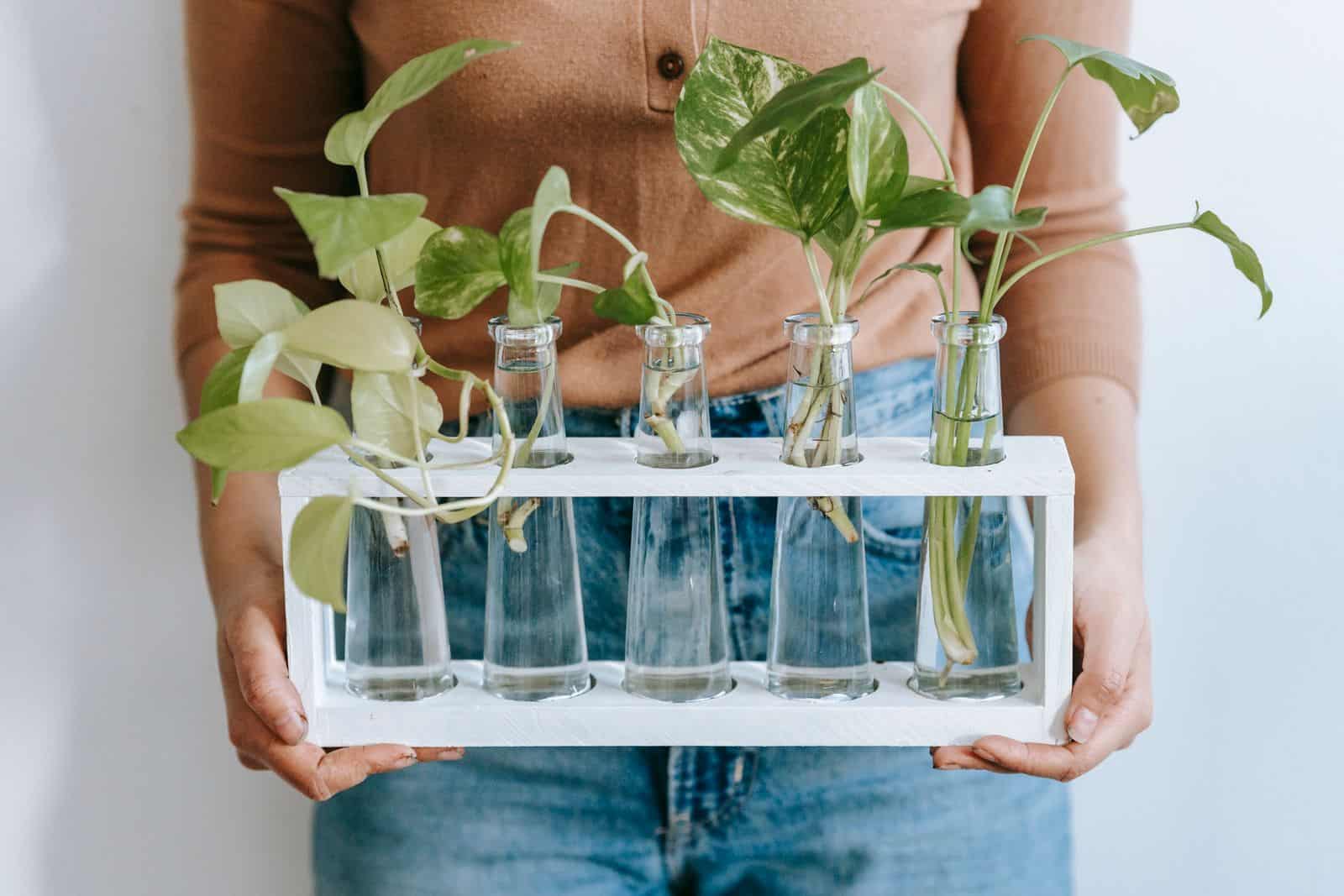
Those cuttings aren’t waste. Pothos roots readily in water or vermiculite in 3 to 4 weeks, with buds starting in 1 to 2 weeks in a warm room. Plant several rooted cuttings together for a full pot. Our plant care section goes deeper on propagation.
6 Common Pothos Mistakes and How to Fix Them
1. Watering on a schedule. Every Sunday regardless of conditions is how pothos drown. Check the soil surface first, every time.
2. A pot with no drainage. That pretty ceramic cachepot with no hole is a bathtub. Keep the plant in a plastic nursery pot and set it inside the decorative one, then lift it out to water.
3. Expecting variegation in a dark corner. Low light means green leaves. If you want the marbling, give it brighter indirect light or pick a solid-green variety like ‘Jade’ instead.
4. Fertilizing through winter. The plant isn’t growing. The salts stay behind and burn the leaf tips.
5. Ignoring mealybugs. The most common pests on indoor pothos are mealybugs and scale — white cottony masses in the leaf axils, or bark-colored bumps on stems. Both leave sticky honeydew. Spider mites show up occasionally and respond to thorough cleaning plus repeated insecticidal soap. For a heavy infestation, Wisconsin Extension says it’s often better to discard the plant and start over with clean cuttings.
6. Never pruning. A pothos left alone becomes one long vine with leaves only at the end. Cutting it back feels drastic and works beautifully.
Pothos Varieties Compared
These are all the same species and want the same care. The difference is how much light each needs to look like itself.
| Variety | Look | Light needed to hold color | Best for |
|---|---|---|---|
| Golden Pothos | Green with golden-yellow variegation | Medium, bright indirect | The classic; forgiving and widely sold |
| Marble Queen | Moss green streaked heavily with white | Medium to bright indirect | High-contrast look; slowest of the common types |
| ‘Jade’ | Solid dark green | Low is fine | Dim rooms, north-facing offices |
| ‘Neon’ | All yellow-green | Bright indirect | Lighting up a dark shelf with color, not pattern |
| ‘Lime’ | Bright yellow-green | Bright indirect | Similar to Neon, slightly deeper tone |
| Pearls and Jade® | Green with white and silvery-gray edges | Medium to bright indirect | Small spaces; slower growing, smaller leaves |
If you’re picking a first houseplant and your apartment is dim, ‘Jade’ is the honest recommendation. See our indoor plants category for other low-light options.
Pothos and Pets
This is the part worth being clear about. Pothos is toxic to both dogs and cats, according to the ASPCA. The toxic principle is insoluble calcium oxalates — microscopic needle-shaped crystals in the leaves and stems that get released when a pet chews them.
Signs include oral irritation, intense burning of the mouth, tongue and lips, excessive drooling, vomiting, and difficulty swallowing. The sap can also irritate human skin, so wear gloves for a big propagation session.
If you think your pet has eaten some, call your veterinarian or the ASPCA Animal Poison Control Center at (888) 426-4435. In a home with a determined chewer, hang it well out of reach — which happens to be how pothos looks best anyway — or pick a different plant.
Frequently Asked Questions
Why are my pothos leaves turning yellow?
Most often overwatering. Check whether the soil stays wet for days and whether the pot drains. That said, older leaves near the base yellowing and dropping one at a time is normal aging, not a problem.
Can pothos grow in water permanently?
Yes. Missouri Botanical Garden notes it tolerates flooding and can be grown in standing water. Growth is slower than in soil and you’ll want to change the water regularly, but a jar of pothos on a windowsill can live for years.
How often should I water a pothos?
There’s no fixed number. Water when the top inch of soil is dry — that might be weekly in a warm bright room in summer and every two to three weeks in winter.
Why is my pothos leggy with leaves only at the tip?
Not enough light, plus no pruning. Move it somewhere brighter and cut the vines back. New growth will fill in from the nodes below the cut.
Does pothos need a moss pole?
No. It’s a root-climber and will happily use one, but it does just as well trailing from a shelf or hanging basket.
Final Thoughts
If you take one thing from this: let the soil dry between waterings, and give it more light than you assume it needs. Almost every unhappy pothos I’ve seen was too wet, too dim, or both.
Don’t worry if yours is a bare vine with four leaves right now. Cut it back hard, root the pieces in a glass of water, and in a month you’ll have a fuller plant than you started with. That’s the real appeal of this one — it forgives you. Browse our indoor plants category for what to grow next.