Walk down the tool aisle at any garden center and you’ll find forty variations on a shovel, a wall of pruners in every color, and gadgets you’ve never seen a real gardener use. It’s a lot. If you’re just starting out, you don’t need any of that — you need a short, honest list of essential garden tools for beginners that will carry you through your first two or three seasons without wasting money.
This list comes straight from what university Extension horticulturists actually recommend, not what a retailer wants to upsell you. Ten tools, in order of how often you’ll reach for them, with real price ranges and the mistakes that send beginners back to the store twice.
Table of Contents
- The 10 Essential Garden Tools for Beginners
- How Much Should You Spend on Garden Tools?
- Caring for Your New Tools
- Frequently Asked Questions
- Final Thoughts
Key Takeaways
- You can start a garden with about $100–$150 in hand tools — you don’t need power equipment on day one.
- A hand trowel, bypass pruners, and a pair of real gardening gloves cover 80% of what a beginner does in the first season.
- Buy the best quality you can afford on tools you’ll use weekly (trowel, pruners); it’s fine to go cheap on tools you’ll use twice a year.
- Bypass pruners, not anvil-style, are what Extension services recommend for live plant material — anvil blades crush stems instead of slicing them.
- Rinse, dry, and lightly oil metal tools after each use. It’s the single habit that makes a $20 trowel outlast a $60 one that’s left dirty in the rain.
The 10 Essential Garden Tools for Beginners
You don’t need to buy all ten at once. Start with the first three, then add the rest as your garden grows.
1. Hand Trowel
The trowel is the tool you’ll use most, for transplanting seedlings, digging small holes for bulbs, and scooping potting mix into containers. NC State Extension lists it as one of the first tools any new gardener should own. Look for a one-piece stainless steel construction — the cheap kind with a plastic handle riveted to the blade is where the “bent trowel” complaints come from. Price range: $8–$25.
2. Bypass Pruning Shears
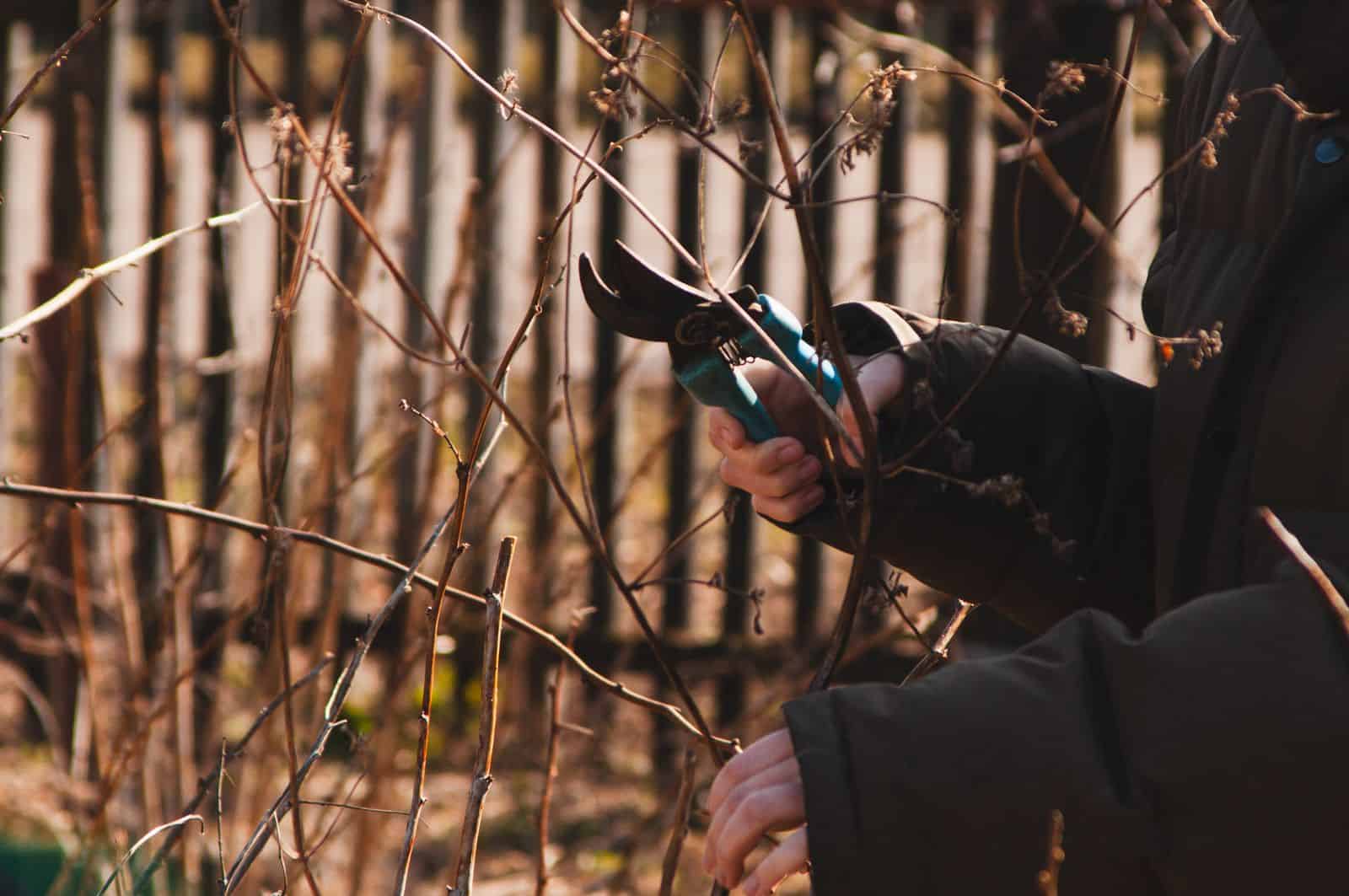
Bypass pruners cut like scissors, with two curved blades sliding past each other, which makes a clean cut that heals faster than a crushed one. They’re for deadheading flowers, trimming herbs, and light pruning on shrubs. Anvil-style pruners (a single blade against a flat edge) are better saved for dead wood, not living stems. Price range: $15–$45. Beginner mistake: letting the blade go dull, which forces you to squeeze harder and mangles the cut.
3. Garden Gloves
A good pair of gloves protects you from thorns, splinters, and the blisters that come from a full afternoon with a trowel in hand. Look for a snug fit with reinforced fingertips — bulky gloves make fine work like weeding or seed-sowing nearly impossible. Keep a lighter pair for delicate tasks and a heavier leather or synthetic-leather pair for anything thorny or rough. Price range: $10–$20 per pair.
4. Round-Point Shovel or Digging Spade
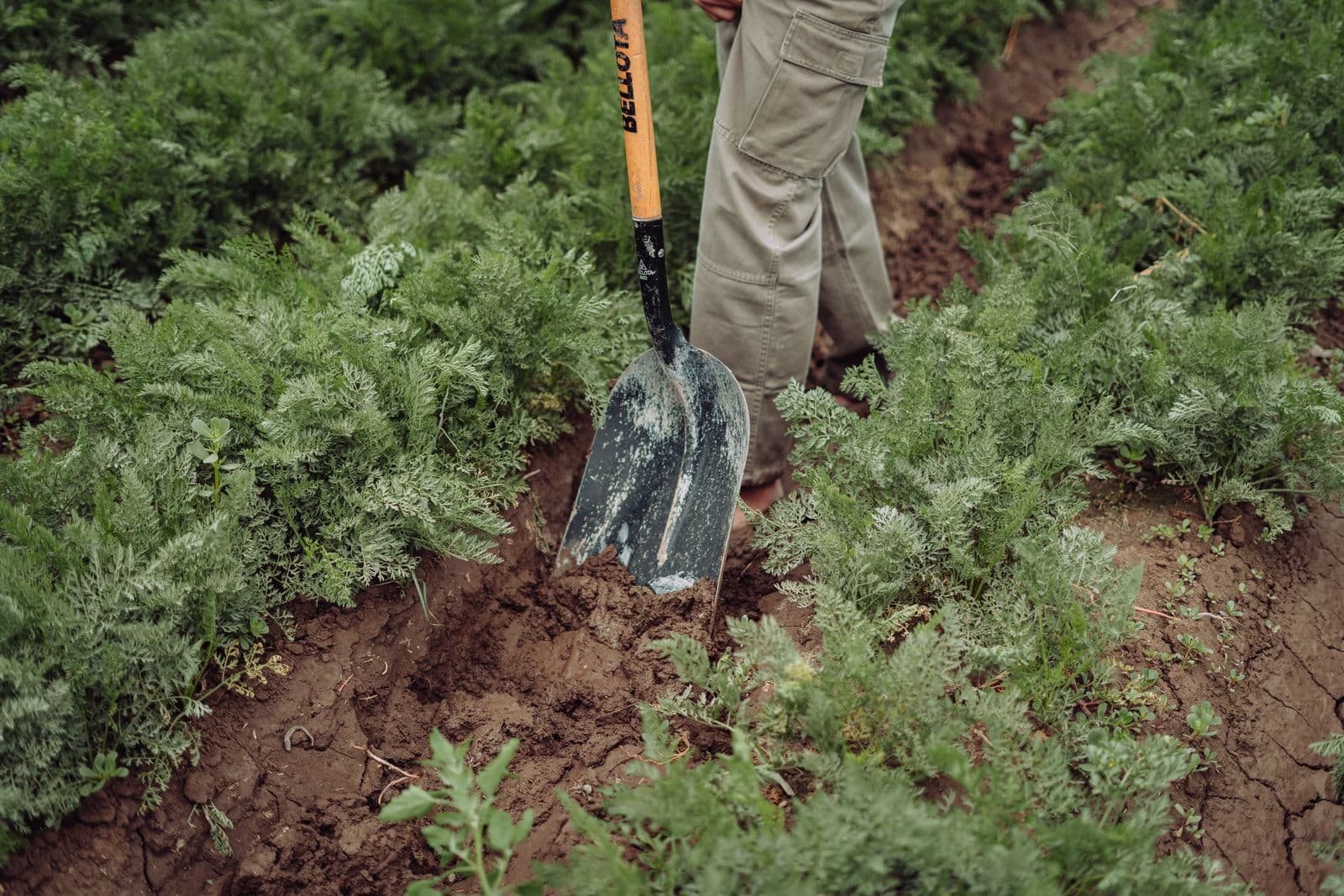
This is your all-purpose digging tool for turning soil, digging planting holes, and moving compost. UF/IFAS Gardening Solutions recommends a round-point shovel as a basic because the pointed blade breaks into soil more easily than a flat spade. A flat-edged spade earns its keep once you’re cutting sod or edging beds. Price range: $25–$50.
5. Garden Hoe
A hoe slices weeds off just below the soil surface and helps break up compacted ground before planting. It’s faster than hand-pulling once weeds get ahead of you, and it does that job standing up instead of on your knees. A basic draw hoe is the most versatile style for a first garden. Price range: $20–$40.
6. Garden (Spading) Fork
Where a shovel moves soil, a fork loosens it — breaking up compacted or clay soil before you plant, turning a compost pile, and lifting root vegetables like potatoes without slicing through them. If you’re building a raised bed, a spading fork is what you’ll use to work compost into the mix without compressing the soil you just loosened. Price range: $30–$60.
7. Hand Cultivator or Hori-Hori Knife
A three-pronged hand cultivator breaks up the top few inches of soil and rips out shallow-rooted weeds. Want one tool that does more? A hori-hori knife — a serrated digging knife — handles weeding, dividing perennials, and planting bulbs in a single design, which is why Colorado State Extension calls it a favorite multi-purpose tool. Price range: $10–$30.
8. Rake (Leaf or Bow Rake)
A leaf rake with flexible tines clears debris and light mulch without gouging the soil. A bow rake, with rigid metal tines, is the one you’ll want for leveling soil and spreading mulch or compost across a bed. Beginners often only need the leaf rake at first; add a bow rake once you’re prepping beds from scratch. Price range: $15–$35.
9. Watering Can
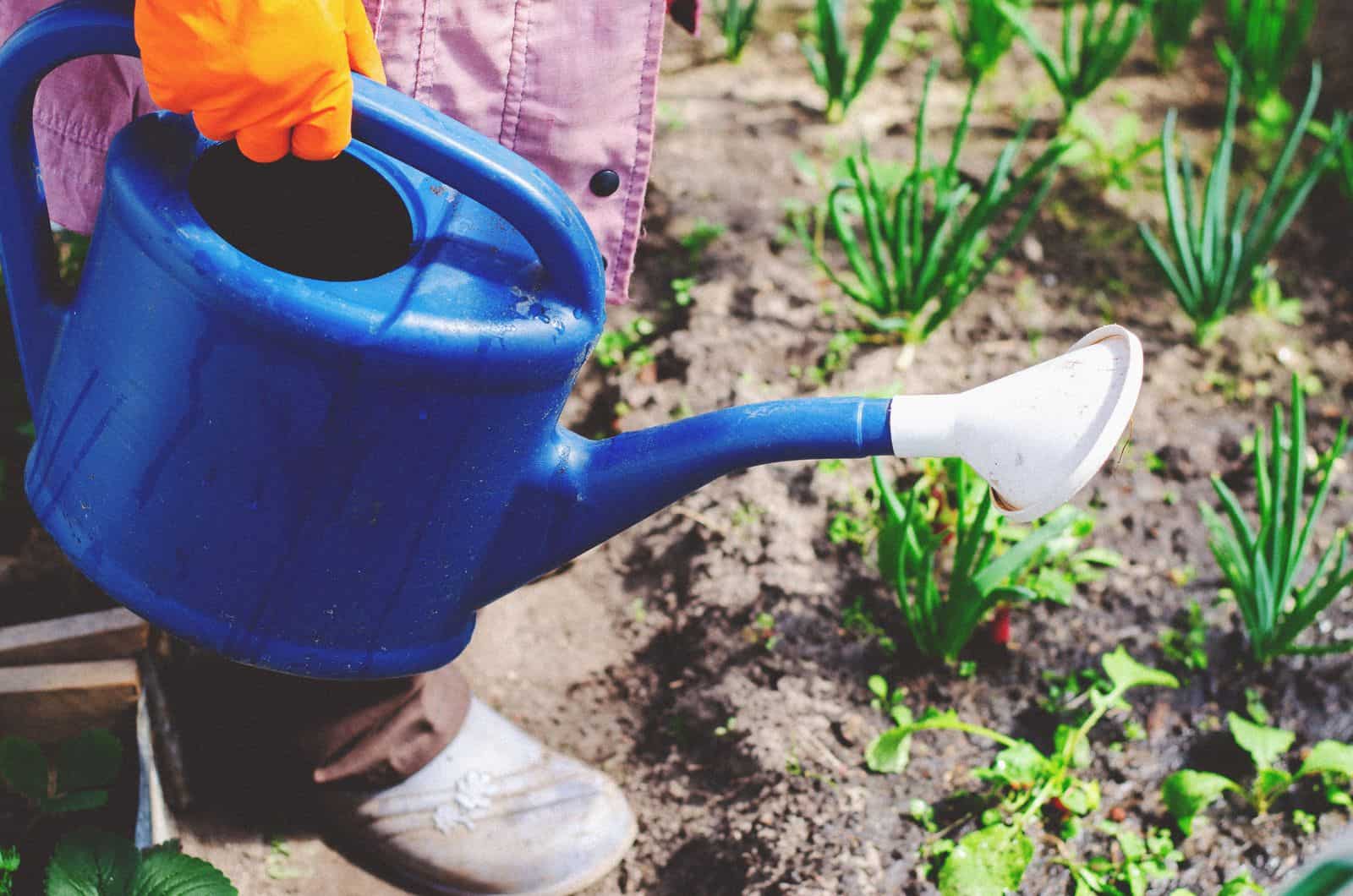
Seedlings and new transplants need a gentle, controlled pour, not the blast of a hose nozzle. A 1–2 gallon can with a detachable rose (the perforated head) gives you that control for containers and small beds. Illinois Extension lists a watering can among its core starter tools for this reason. Price range: $15–$30.
10. Garden Hose with an Adjustable Nozzle
Once your garden is bigger than a few pots, a hose takes over from the watering can. An adjustable nozzle lets you switch between a gentle shower for seedlings and a stronger stream for rinsing tools or washing down a patio. A 50-foot hose covers most suburban yards without becoming unwieldy to coil. Price range: $25–$60.
How Much Should You Spend on Garden Tools?
You can put together a solid starter kit — trowel, pruners, gloves, shovel, and a watering can — for around $80 to $150, and that will genuinely carry a beginner through most first-year projects.
The advice that comes up again and again from Extension horticulturists, including UC Marin Master Gardeners, is to buy the best quality you can afford rather than the cheapest option on the shelf. That doesn’t mean overspending across the board — it means putting your money into the tools you’ll pick up every week, like the trowel and the pruners, and staying relaxed about tools you’ll use only a few times a season. A $60 pair of pruners that stays sharp for a decade beats replacing a $12 pair every spring.
Skip the power tools for now. A beginner-size garden — a few raised beds, some containers, a small flower border — doesn’t need a tiller or a powered edger. Add those later if your garden grows into needing them.
| Tool | Best For | Price Range (USD) | Watch Out For |
|---|---|---|---|
| Hand trowel | Transplanting, digging small holes | $8–$25 | Plastic-handled models that bend under pressure |
| Bypass pruners | Deadheading, light pruning, herbs | $15–$45 | Anvil-style blades crushing live stems |
| Garden gloves | Hand protection, thorny plants | $10–$20 | Bulky fit that ruins fine motor tasks |
| Round-point shovel | Digging, turning soil, moving compost | $25–$50 | Thin-gauge steel that flexes in hard soil |
| Garden hoe | Slicing weeds, breaking compacted soil | $20–$40 | Dull edges that tear instead of cut |
| Spading fork | Loosening soil, turning compost | $30–$60 | Bent tines from prying rocks |
| Hand cultivator / hori-hori | Shallow weeding, planting bulbs | $10–$30 | Cheap stamped-metal prongs that snap |
| Rake (leaf or bow) | Clearing debris, leveling soil | $15–$35 | Wrong type for the job (flexible vs. rigid tines) |
| Watering can | Seedlings, containers, indoor starts | $15–$30 | No detachable rose for a gentler pour |
| Garden hose + nozzle | Watering established beds, rinsing tools | $25–$60 | Kinking cheap hoses that crack in cold weather |
Caring for Your New Tools
A little upkeep goes a long way. Rinse soil off metal blades after each use, dry them before storing, and wipe with a light coat of oil once in a while to keep rust from creeping in. Hang tools rather than leaving them on damp ground, and keep pruner blades sharp — a dull blade does more damage to your plants than a sharp one, since it tears rather than cuts cleanly. We’ll cover a full rust-removal method in a future post, but a quick wipe-down after every session prevents most of the problem in the first place.
Frequently Asked Questions
Do I need a wheelbarrow to start a garden?
Not for a first-year garden of a few beds or containers. A sturdy bucket or garden cart handles small loads of soil, mulch, or weeds just fine. Add a wheelbarrow once you’re moving material in bulk.
Should I buy hand tools or power tools first?
Hand tools first, always. A trowel, pruners, and a shovel cover nearly everything a new garden needs. Power tools like tillers or hedge trimmers make sense only once your garden is established enough to justify them.
What’s the difference between a spade and a shovel?
A shovel has a curved, pointed blade built for digging and scooping. A spade has a flat, sharp-edged blade built for cutting — through sod, roots, or clean bed edges. Beginners usually reach for the shovel more often.
How do I know if my pruners are bypass or anvil style?
Bypass pruners have two curved blades that slide past each other like scissors. Anvil pruners have one blade that closes onto a flat metal edge. If you’re buying just one pair, choose bypass — it’s the safer default for live plant stems.
Is it worth buying a tool set instead of individual pieces?
Sometimes, but check the quality of each piece first. Boxed sets often bundle one or two good tools with several flimsy ones. Buying your top three individually — trowel, pruners, gloves — and filling in the rest later usually gets you better tools for the same money.
Final Thoughts
You don’t need a shed full of gear to grow a good garden — you need a handful of well-made tools that fit your hand and do their one job well. Start with a trowel, a pair of bypass pruners, and real gloves, and add the rest as your beds grow. If you’re setting up a raised bed as your next project, our raised bed soil mix recipe walks through exactly what these tools will be turning and amending. For more buying guides as we publish them, check the Tools & Gear category.