You brought home a Monstera deliciosa for those dramatic, hole-punched leaves — and months (or years) later, you’re still unwrapping solid green hearts with zero fenestration. You’re not obviously doing anything wrong. The plant looks healthy. New leaves keep coming. They’re just plain.
Monstera leaves not splitting is one of the most common frustrations with this plant. The cause is almost always one of six fixable things: the plant’s age, its light, its humidity, whether it has something to climb, its watering, or its feeding. None of them mean you need a new plant. Work through the list below in order, and you’ll usually spot the culprit in the first three.
Table of Contents
- What Fenestration Actually Is
- Monstera Leaves Not Splitting? 6 Common Reasons
- Symptom, Cause, and Fix at a Glance
- Frequently Asked Questions
- Final Thoughts
Key Takeaways
- Fenestration — the splits and holes — only forms on mature leaves. A young monstera’s plain leaves aren’t a mistake; they’re a stage.
- Light is the number-one fixable cause. Monsteras need bright, indirect light to push out fenestrated growth; low light keeps leaves small and solid.
- Humidity above 50%, a climbing support, steady watering, and regular feeding all help a mature plant fenestrate faster and more fully.
- Both overwatering and underwatering stress the plant enough to stall new growth — check the soil, not the calendar.
- Monstera deliciosa is toxic to cats and dogs, so keep it out of chewing range regardless of how it’s splitting.
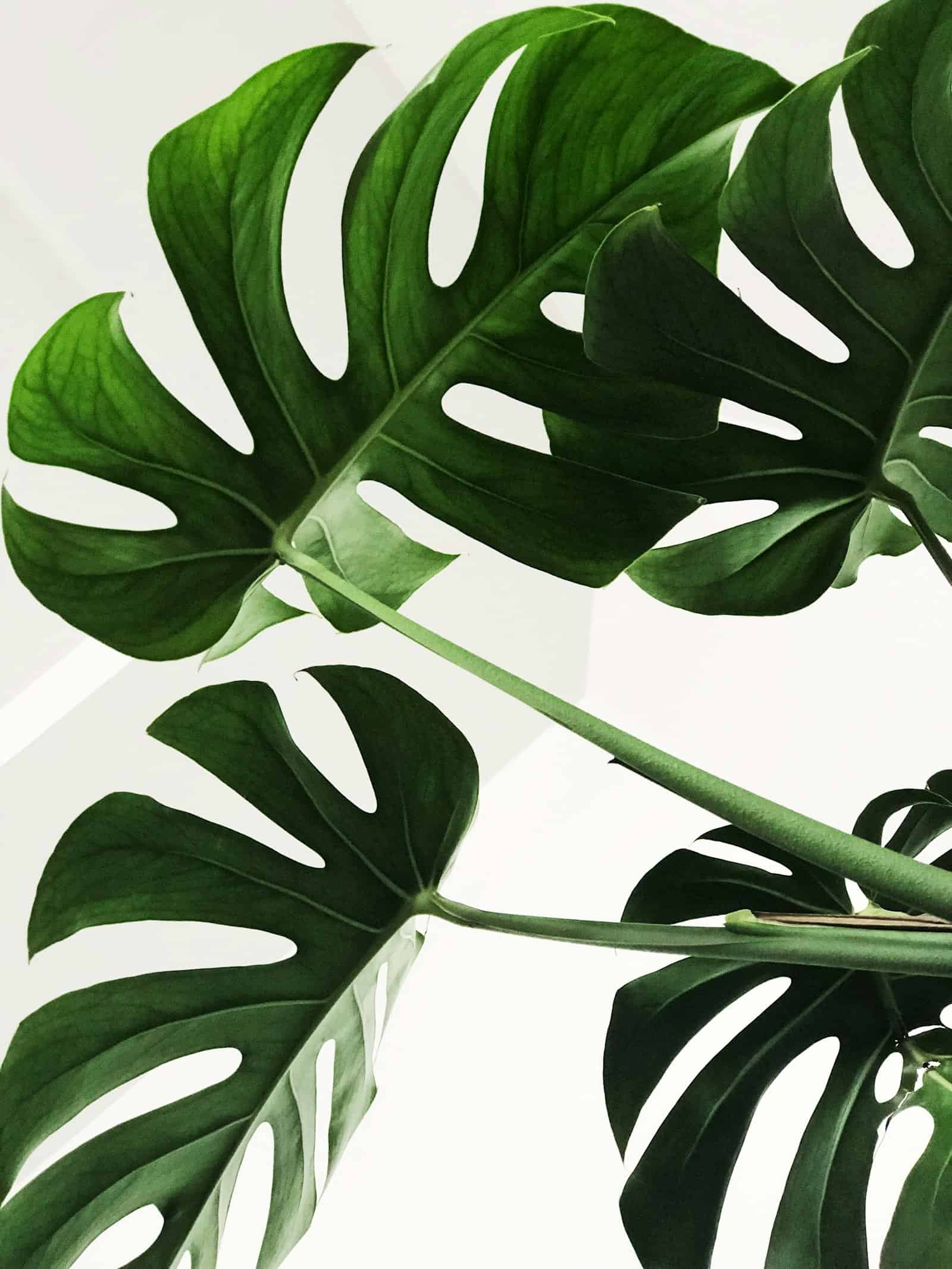
What Fenestration Actually Is
Fenestration is the technical name for the splits and holes in a mature monstera leaf. Botanists debate exactly why the species evolved it — theories range from letting wind pass through the huge leaves, to letting light reach the lower leaves of a climbing vine. Either way, it’s a feature of maturity, not just species identity.
That distinction matters for troubleshooting. According to NC State Extension’s Plant Toolbox, monstera “develops fenestration only on mature leaves” — juvenile growth is normally solid and heart-shaped. So if every leaf on your plant so far has been plain, that’s not automatically a care failure. It’s worth working through the six reasons below anyway, because most of them also govern how fast your plant reaches maturity in the first place.
Monstera Leaves Not Splitting? 6 Common Reasons
1. Your Plant Is Still Too Young
Every monstera starts life producing small, solid, unsplit leaves — that’s normal juvenile growth, not a symptom of bad care. Fenestration only shows up once the plant has matured past that early stage, per NC State Extension.
Fix: If your plant is young nursery stock or grown from a small cutting, plain leaves aren’t a problem to solve yet. Getting the next five reasons right will shorten the wait.
2. It’s Not Getting Enough Light
This is the single biggest lever most indoor growers can pull. Penn State Extension notes that monsteras “prefer bright, indirect light” and will grow leggy in lower light. NC State Extension describes the ideal as “moderate brightness but not direct sunlight.”
In low light, the plant conserves energy: smaller leaves, longer stretches of bare stem between them, and little to no splitting.
Fix: Move it within a few feet of an east- or south-facing window with sheer curtains, or a bright north window if that’s what you have. Avoid harsh, direct midday sun, which can scorch leaves. If natural light is limited, a simple LED grow light on a timer closes the gap.
3. Humidity Is Too Low
Monsteras are tropical understory plants, and Penn State Extension flags humidity as a real requirement, recommending levels above 50%. Average American homes, especially with winter heat or summer AC running, often sit well below that.
Fix: Group houseplants together to raise local humidity, set the pot on a tray of wet pebbles (without letting the pot sit in standing water), or run a small humidifier nearby. Keep the plant away from heating and cooling vents, which dry the air fastest.
4. It Has Nothing to Climb
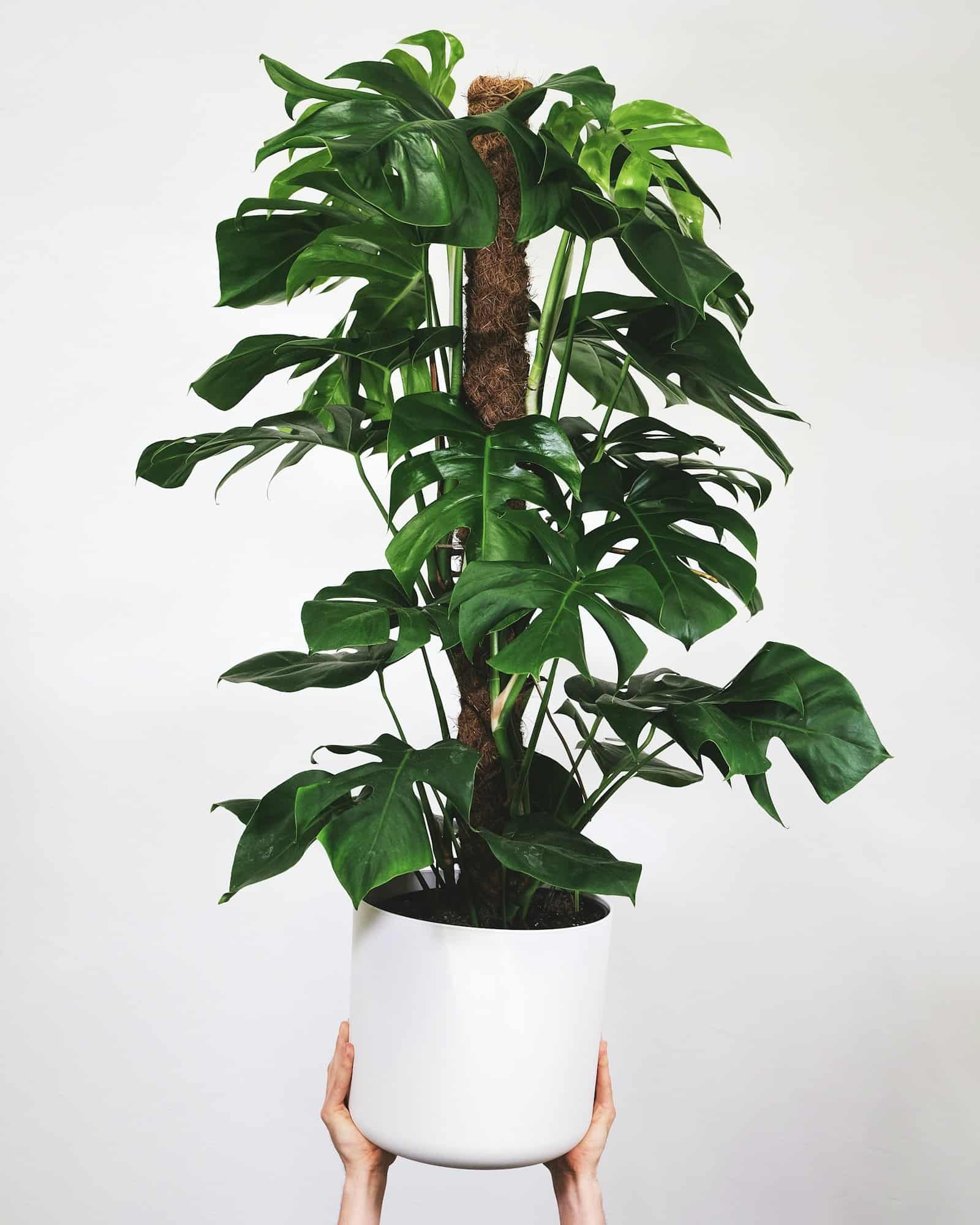
In the wild, monstera climbs tree trunks, and that vertical growth habit is tied to leaf maturity. NC State Extension notes the plant “produces aerial rootlets for climbing” and that “sturdy support is necessary to prevent the stems from breaking.” Penn State similarly recommends moss poles, trellises, or bamboo stakes as the plant reaches its typical indoor height of 6 to 8 feet — and a monstera left to sprawl with nothing to grab often stays smaller-leaved and more juvenile-looking for longer.
Fix: Add a moss pole or coir totem and gently guide the stem against it, tucking the aerial roots into the damp moss. Mist the pole along with the plant — it helps roots anchor in rather than dry out and go dormant.
5. Watering Is Off — Too Much or Too Little
Watering stress shows up before splitting does, because the plant redirects energy into survival, not new growth. Penn State advises watering thoroughly, then letting the top 1 to 2 inches of soil dry before the next watering. Overwatering in particular risks root rot, which slows or stops new growth entirely.
If you’ve read our pothos care guide, the same principle applies here: check the soil, not the calendar.
Fix: Stick a finger a couple of inches into the soil before watering. Water thoroughly until it drains from the bottom, and never let the pot sit in a saucer of standing water. Make sure the container actually has drainage holes.
6. It Needs Feeding
A monstera that hasn’t been fed in a long time, or was never fed, has less energy available to invest in bigger, more complex leaves. Penn State Extension recommends a balanced houseplant fertilizer every two weeks during the growing season and monthly through winter.
Fix: Feed with a balanced, water-soluble fertilizer from spring through summer, cutting back in fall and winter. If it’s been a couple of years since repotting, fresh soil will also give the roots more nutrients to work with.
Symptom, Cause, and Fix at a Glance
| Symptom | Likely Cause | Fix |
|---|---|---|
| Small plant, every leaf solid so far | Still immature | Be patient; keep the other five factors on point |
| Leaves small, stem stretching toward the window | Not enough light | Move to bright, indirect light or add a grow light |
| Crisp leaf edges, slow new growth | Humidity too low | Pebble tray, humidifier, or group with other plants |
| Long, sprawling vine with nothing to grab | No climbing support | Add a moss pole and tuck in aerial roots |
| Yellowing leaves or mushy stems | Overwatering | Let the top 1–2 inches of soil dry before watering |
| Wrinkled, drooping leaves | Underwatering | Water thoroughly and check soil more often |
| Pale new leaves, no growth in months | Needs feeding | Fertilize every two weeks in the growing season |
Frequently Asked Questions
How long does it take for a monstera to start splitting?
There’s no fixed timeline — it depends on how close the plant’s light, humidity, and feeding are to ideal. A monstera in strong, consistent bright indirect light with something to climb typically splits sooner than one in a dim corner with no support.
Can a monstera split without a moss pole?
Yes, but a support often speeds things up. Climbing against something is part of how the plant grows toward maturity in its natural habitat, so an unsupported, sprawling plant can take longer to reach the fenestration stage even with good light.
Is a monstera with no splits still healthy?
Usually, yes. Solid leaves on a young or recently repotted plant are normal. As long as new leaves keep unfurling, the color looks good, and there’s no wilting or rot, it isn’t struggling — it’s just not mature yet.
Do all monstera varieties fenestrate the same way?
No. Variegated cultivars like Monstera ‘Thai Constellation’ need more light than solid green Monstera deliciosa to fenestrate well, per NC State Extension, since variegated tissue has less chlorophyll to work with. Related species like Monstera adansonii naturally show smaller, rounder holes instead of deep splits.
Are monstera leaves toxic to pets?
Yes. Per the ASPCA, monstera deliciosa is toxic to cats and dogs due to insoluble calcium oxalates, causing oral irritation, drooling, and vomiting if chewed. Keep it out of reach of curious pets.
Final Thoughts
Un-split leaves on a monstera almost never mean the plant is failing — they usually mean one or two conditions just need a nudge. Start with light and age, since those explain most cases, then work through humidity, support, watering, and feeding. Give it a season, and you’ll likely see your first real split show up on its own.
For more houseplant troubleshooting like this, browse the rest of our Indoor Plants coverage.