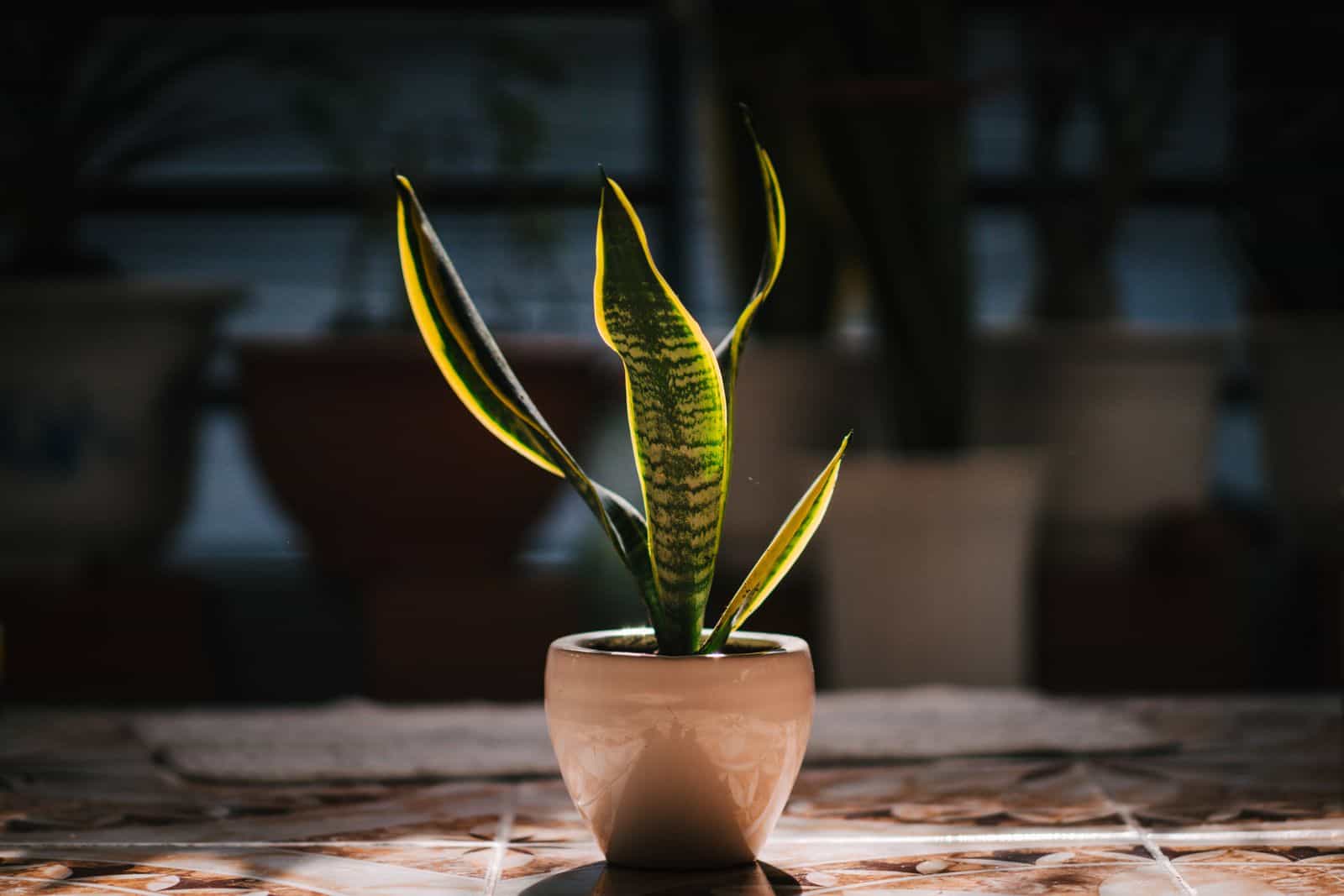
If you’ve killed every houseplant you’ve ever owned, start over with a snake plant. Good snake plant care asks for almost nothing: a little light, infrequent water, and soil that drains. Most people go wrong by loving it too hard — watering on a schedule instead of waiting for the soil to actually dry out.
This guide covers everything a beginner needs: light, watering, soil, feeding, repotting, the most common ways this plant gets sick, and how to turn one pot into five for free.
Table of Contents
- 7 Rules for No-Fail Snake Plant Care
- Light: What a Snake Plant Actually Needs
- Watering: The Rule That Matters Most
- Soil, Pots, and Repotting
- Feeding and Humidity
- Common Snake Plant Problems
- How to Propagate a Snake Plant
- Popular Snake Plant Varieties Compared
- Is Snake Plant Toxic to Pets?
- Frequently Asked Questions
Key Takeaways
- Water only when the soil is completely dry, top to bottom — that’s roughly every 2 to 4 weeks in summer, every 6 to 8 weeks in winter.
- Snake plants tolerate low light but grow fastest in bright, indirect light. Direct hot sun can scorch the leaves.
- Use a fast-draining, cactus-style mix in a pot with a drainage hole. Soggy soil is the number one killer.
- Mushy, yellowing, or collapsing leaves mean root rot, not thirst — stop watering and check the roots.
- All parts of the plant are mildly toxic to cats and dogs (ASPCA), so keep it away from chewers.
7 Rules for No-Fail Snake Plant Care
Before the details, here’s the plant in seven lines:
- Bright, indirect light is ideal — but it survives in low light too.
- Water only when the soil is bone dry, all the way down.
- Use fast-draining, gritty soil — never a moisture-retentive mix.
- Skip heavy feeding. A light, diluted fertilizer a few times a year is plenty.
- Leave it in its pot. Snake plants like being a little rootbound and only need repotting every few years.
- Watch the leaves, not the calendar. Mushy or yellow leaves mean too much water, not too little.
- Propagate by division if you want new plants that match the parent exactly.
Light: What a Snake Plant Actually Needs
Snake plant (Dracaena trifasciata, formerly classified as Sansevieria trifasciata) is famous for surviving in dim corners, and it genuinely will — but “surviving” and “thriving” look different. In low light, growth slows to a crawl and variegated types like ‘Laurentii’ fade toward solid green.
For steady growth, give it bright, indirect light, such as a spot a few feet back from an east- or west-facing window. A little direct morning sun is fine; hot afternoon sun through south- or west-facing glass can scorch the leaves and leave brown, papery patches. If you only have a dim hallway or a north-facing room, the plant will hang on — it just won’t put out many new leaves.
Watering: The Rule That Matters Most
More snake plants die from watering than from neglect. This plant stores water in its thick, upright leaves, so it can go weeks without a drink and come out fine. What it can’t survive is sitting in wet soil.
The rule: water only when the soil is completely dry, from the surface to the bottom of the pot — not just the top inch. Push a finger or a wooden skewer down into the soil to check before you water. As a rough guide, that usually works out to watering every 2 to 4 weeks in the growing season (spring and summer) and every 6 to 8 weeks in winter, when the plant is barely growing and needs far less. When you do water, soak the soil until it runs out the drainage hole, then let the pot dry out again completely before the next round.
Always use a pot with a drainage hole. A cache pot or decorative sleeve is fine as long as you pull the plastic nursery pot out to water and let it drain before setting it back in.
Soil, Pots, and Repotting
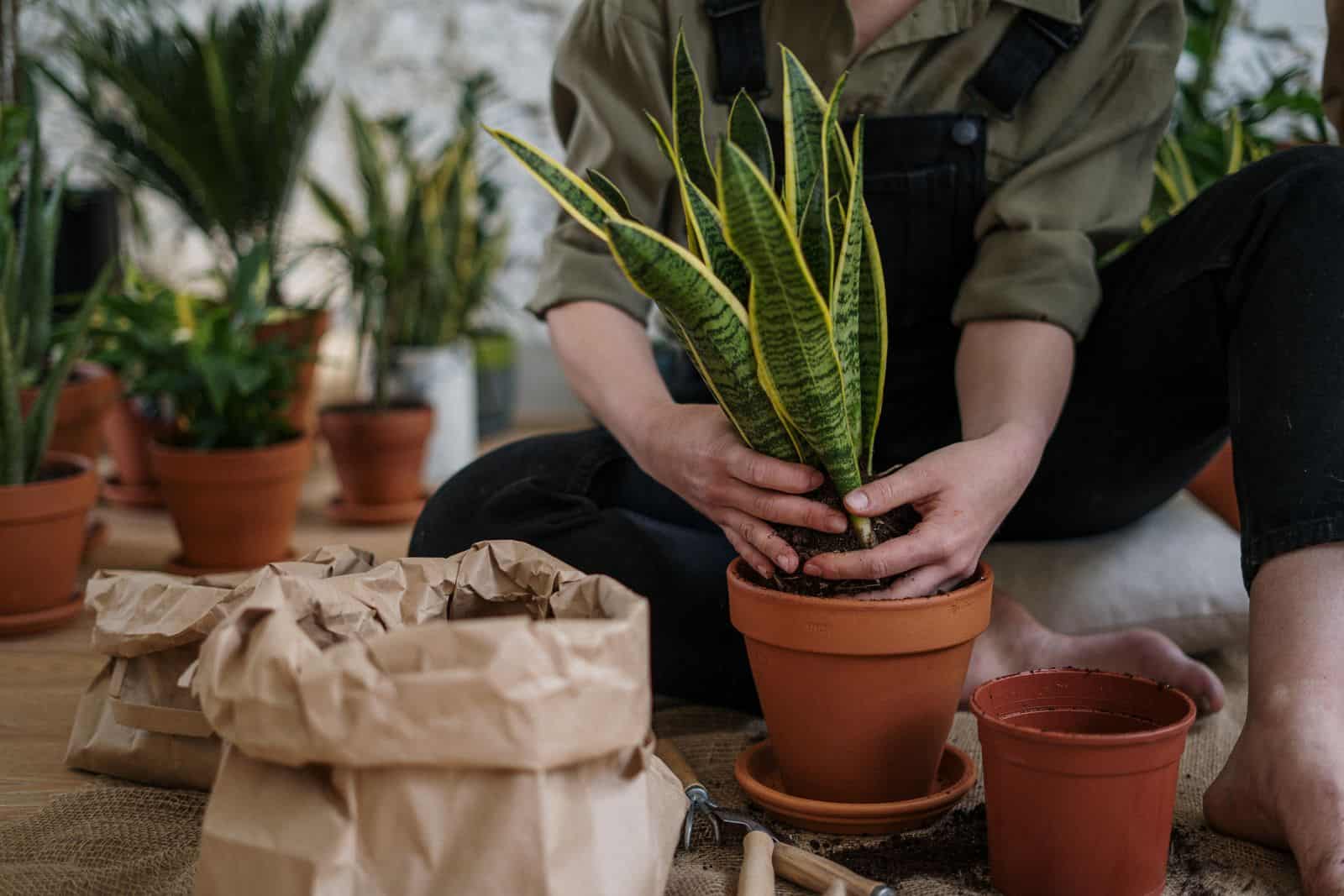
Snake plants need soil that dries out fast. A cactus or succulent potting mix works well on its own, or you can amend regular potting soil with extra perlite or coarse sand — aim for roughly one part mix to one part perlite. Skip anything labeled “moisture control.”
Unlike most houseplants, snake plants actually prefer being a little snug in their pot, and they only need repotting every few years, once roots are visibly circling or pushing the plant up out of the soil. When you do repot, do it in spring or summer and go up just one pot size — a container that’s too large holds excess moisture the roots don’t need.
Feeding and Humidity
This isn’t a hungry plant. A balanced, diluted liquid fertilizer once a month during spring and summer is enough, or a single application of a slow-release granular fertilizer at the start of the growing season. Skip fertilizer entirely in fall and winter — feeding a plant that isn’t actively growing just builds up salts in the soil.
Snake plants are also unbothered by the low humidity of a typical heated home in winter, which is part of why they’re such a forgiving choice for beginners. Normal indoor humidity and average room temperatures (65–85°F) suit them fine; just keep them away from cold drafts and AC vents blowing directly on the leaves.
Common Snake Plant Problems
Mushy, collapsing, or dark leaves
This is root rot, almost always caused by soil that’s stayed wet too long. Pull the plant from its pot and check the roots: healthy roots are firm and pale; rotten ones are brown or black, slimy, and often smell sour. Trim away any mushy roots and leaves with a clean, sharp blade, let the remaining rootball dry out for a day, and repot into fresh, dry, fast-draining mix. Hold off watering for a couple of weeks afterward.
Yellow leaves
Yellowing is most often another overwatering symptom, though it can also come from too little light or a pot that’s sat in standing water in its saucer. It’s worth ruling out the same causes we cover in our full guide to why plant leaves turn yellow, since the diagnosis process is nearly identical across houseplants.
Brown, crispy tips
Usually underwatering, dry air combined with fertilizer buildup, or leaf-tip contact with a cold window pane. Trim the brown tip with clean scissors at an angle that follows the leaf’s natural shape, and water a little more consistently going forward.
Soil that stays wet attracts fungus gnats
If you notice tiny flies hovering over the pot, that’s a sign the soil has been staying damp for too long between waterings. Letting the soil dry out fully — which snake plants need anyway — is also the fix; see our step-by-step guide on how to get rid of fungus gnats if they’ve already moved in.
How to Propagate a Snake Plant
Snake plants are easy and cheap to multiply, and there are two main routes:
Division (fastest, and the only method that keeps variegation true to the parent). Remove the plant from its pot and look for the rhizome — the thick horizontal stem the leaves grow from. Use a clean, sharp knife to cut it into sections, each with a few leaves and some roots attached, then pot each section separately in fresh, dry mix. New growth typically shows within a few weeks.
Leaf cuttings (slower, and variegated types will usually revert to plain green, since variegation lives in growth tissue the cutting doesn’t include). Cut a healthy leaf into 3- to 4-inch sections, let the cut ends callus over for a day or two, then stand them upright in water or moist perlite. Roots form in several weeks; new plantlets follow after that. Keep cuttings out of direct sun while they root.
Popular Snake Plant Varieties Compared
| Variety | Best for | Mature height | Watch out for |
|---|---|---|---|
| ‘Laurentii’ | Classic look, gifts | 2–4 ft | Yellow leaf edges fade in low light |
| ‘Moonshine’ | Statement piece, pale silvery leaves | 1–2 ft | Solid pale color shows dust easily |
| Cylindrica (‘Spear Sansevieria’) | Modern, sculptural styling | 2–3 ft | Slower growing than flat-leaf types |
| ‘Whale Fin’ (single broad leaf) | Small spaces, minimalist look | 1–2 ft | Root rot kills the whole plant since it’s one leaf |
| ‘Golden Hahnii’ | Small pots, shelves | 6–8 in | Slow to bulk up; patience needed |
Is Snake Plant Toxic to Pets?
Yes. According to the ASPCA, snake plant contains saponins that are toxic to both cats and dogs. Chewing or eating the leaves typically causes drooling, vomiting, diarrhea, or loss of appetite rather than anything life-threatening, but it’s still worth keeping the plant out of reach of a curious cat or a puppy that likes to chew. If you suspect your pet has eaten part of the plant, contact your veterinarian or the ASPCA Animal Poison Control Center.
If you’re building a pet-friendly plant shelf and want a low-maintenance option that’s just as forgiving but non-toxic, pothos care is worth reading before you assume every tough houseplant is safe — pothos is actually toxic too, so check any plant’s ASPCA listing before you buy.
Frequently Asked Questions
How often should I water a snake plant?
Only when the soil is completely dry through the whole pot — typically every 2 to 4 weeks in spring and summer, and every 6 to 8 weeks in winter. Always check with a finger or skewer rather than watering on a fixed schedule.
Can a snake plant survive in a room with no windows?
It will survive longer than most houseplants, but it still needs some light to grow — even bright artificial light nearby helps. True windowless rooms will eventually stall growth entirely.
Why is my snake plant falling over or splitting at the base?
A leaf that’s gone soft and floppy at the base is almost always root rot from overwatering. Firm, upright leaves that simply lean can mean the pot is top-heavy or the plant needs more light to grow sturdier new leaves.
Are snake plants toxic to cats and dogs?
Yes — the ASPCA lists snake plant as toxic to both, due to saponins that cause gastrointestinal upset if chewed or eaten.
How do I know if my snake plant needs a bigger pot?
Snake plants like being snug. Only size up when roots are visibly circling the pot’s edge or pushing the plant upward out of the soil — usually every 3 to 5 years, not annually.
Final Thoughts
Snake plant care rewards a light touch. Give it decent light, walk away from the watering can more often than feels natural, and use soil that drains fast, and you’ll have one of the toughest houseplants there is. If you want the full run-down on plants that keep growing in the shadiest corner of your house, our Indoor Plants category has more forgiving picks that pair well with this one.