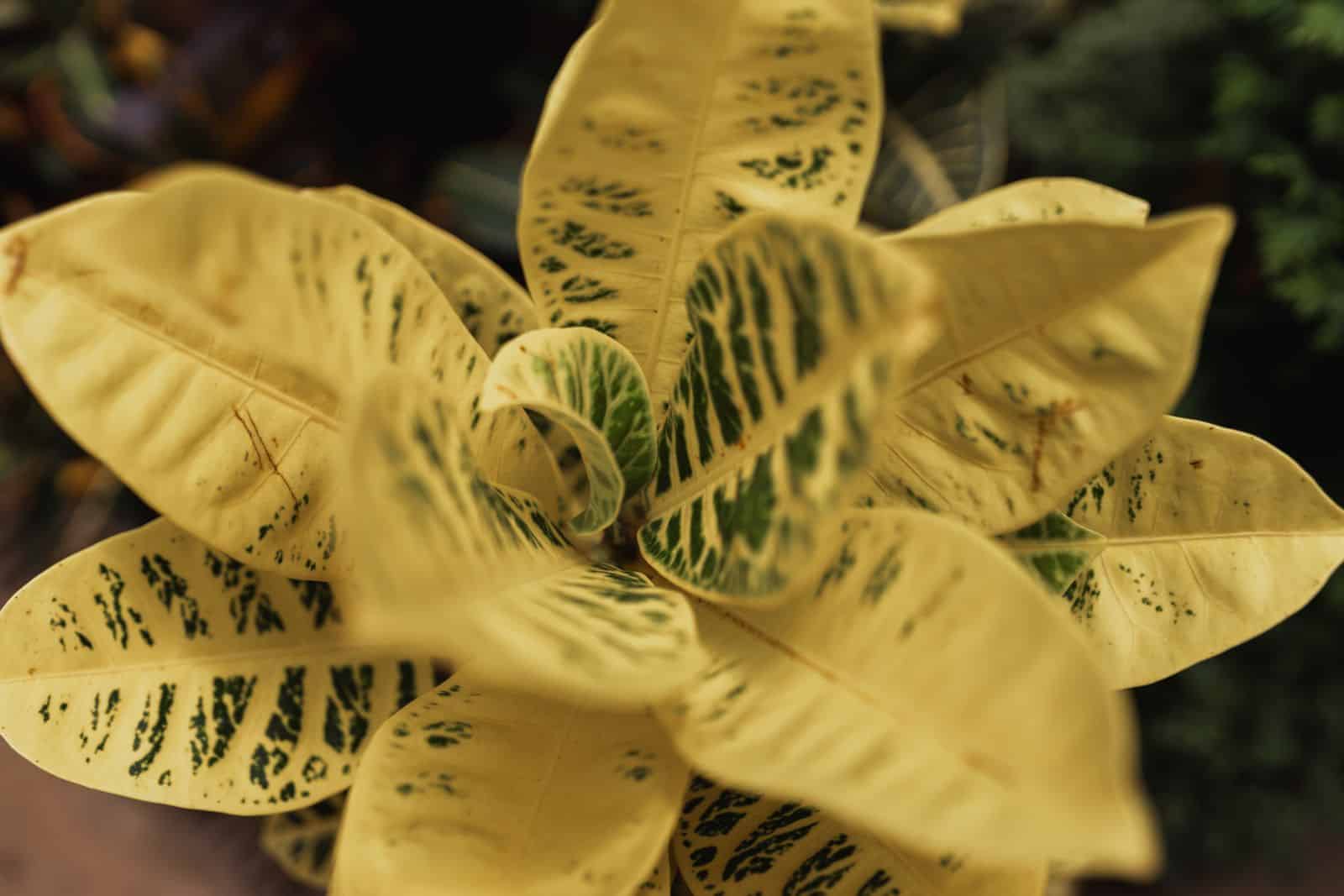
You water on schedule and the plant sits in a decent spot, and yet there it is: another yellow leaf. That’s the frustrating part about yellow leaves on plants — they can mean almost opposite things, from too much water to too little, too much light to too little, or nothing wrong at all.
The good news: the yellowing pattern is a clue. Where it starts, how the leaf feels, and what the soil is doing usually points straight to the cause. Here are the seven most common reasons, how to tell them apart, and what to do about each.
Table of Contents
- At a Glance: What’s Causing Yellow Leaves on Plants
- 1. Overwatering and Root Rot
- 2. Underwatering
- 3. Too Little or Too Much Light
- 4. Nutrient Deficiency
- 5. Natural Aging
- 6. Pest Damage
- 7. Temperature Stress and Drafts
- Frequently Asked Questions
- Final Thoughts
Key Takeaways
- Overwatering is the single most common cause of yellow leaves on plants — check the soil and roots first.
- Where the yellowing starts matters: lower/older leaves point to watering or nitrogen issues; new growth turning yellow points to light, pests, or a root problem.
- A crispy, curling yellow leaf means underwatering; a soft, mushy one means overwatering.
- One yellow leaf at the bottom of an otherwise healthy plant is usually normal aging, not a problem.
- A yellow leaf won’t turn green again — the goal is stopping the next one.
At a Glance: What’s Causing Yellow Leaves on Plants
| Where it starts | How the leaf feels | Likely cause | Quick fix |
|---|---|---|---|
| Lower leaves, soil stays wet | Soft, mushy | Overwatering / root rot | Let soil dry out; check roots; repot if mushy |
| Any leaf, soil bone-dry | Dry, crispy, curling | Underwatering | Soak until water runs from drainage holes |
| New growth, whole plant pale | Normal texture | Too little light | Move closer to a bright window |
| Sun-facing side, patchy | Bleached, papery | Too much direct light | Move back from harsh afternoon sun |
| Lower leaves, uniform yellow | Normal texture | Nitrogen deficiency | Feed with balanced liquid fertilizer |
| One or two oldest leaves | Normal texture | Natural aging | Trim it off — no action needed |
| Speckled, fine webbing | Dry, dusty | Pest damage (spider mites) | Rinse leaves; treat with insecticidal soap |
| Sudden, after cold snap/vent | Normal to dry | Temperature stress | Move away from drafts and vents |
Overwatering and Root Rot
Rule this one out first. Per University of Maryland Extension, overwatering is the number one reason indoor plants fail, and it shows up as leaf yellowing.
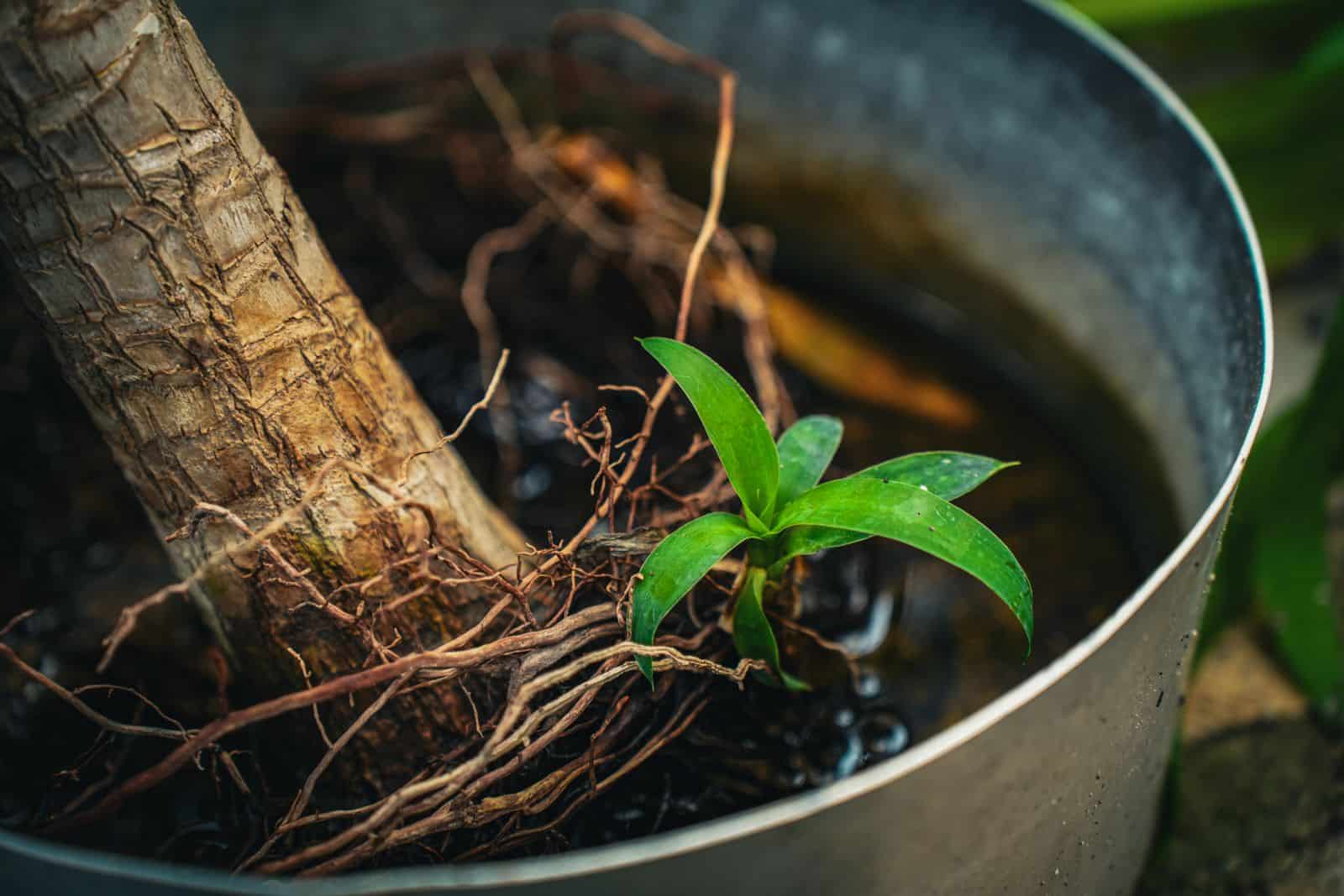
Soggy soil pushes oxygen out of the root zone, so roots suffocate and rot — and rotted roots can’t take up water or nutrients, so the plant yellows even while sitting in plenty of moisture. Yellowing starts on the lower, older leaves, and stems feel soft instead of firm.
Fix it: Let the soil dry out before watering again — the top inch or two for most houseplants. Check the roots: healthy ones are firm and pale, rotted ones are brown-black and mushy. Trim rotted roots, repot into fresh mix, and confirm the pot has drainage holes. For the full rescue walkthrough, see our root rot rescue guide.
If you’re growing a pothos, this is almost always the culprit — our pothos care guide covers the exact watering rhythm and root-rot warning signs for that plant.
Underwatering
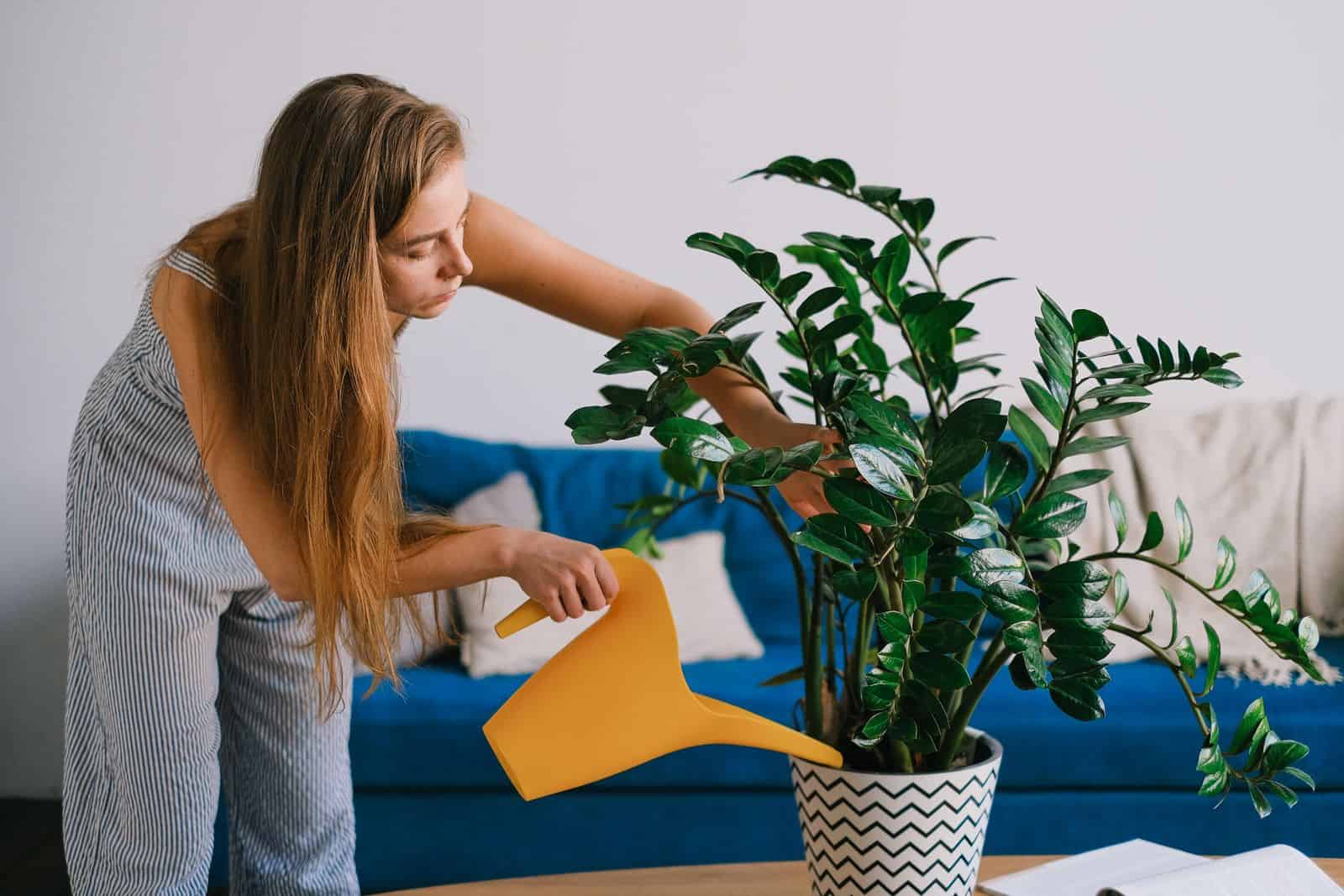
Easy to mix up with overwatering at a glance, but the leaf feel gives it away: underwatered leaves turn yellow and go dry and crispy, often curling inward with brown edges. Check the soil — if it’s pulled away from the pot’s sides or feels bone-dry a couple of inches down, that’s your answer.
Fix it: Water deeply until it runs from the drainage holes, instead of frequent shallow sips that only wet the top layer. If the soil is dry enough to repel water, sit the pot in a shallow tray of water for 20–30 minutes to rehydrate it evenly.
Too Little or Too Much Light
University of Maryland Extension lists both insufficient light and overly intense direct sun as environmental triggers for yellowing.
Too little light: the plant can’t produce enough energy for all its foliage, so it sheds older, shaded leaves to conserve resources for new growth, which often comes in small and pale.
Too much light: direct, hot sun through a south- or west-facing window can scorch leaves used to bright, indirect light, leaving bleached, papery patches on the side facing the window.
Fix it: Move a light-starved plant closer to your brightest window, or add a grow light in darker months. Move a scorched plant back from direct rays. Light needs vary by species — our guide to why monstera leaves aren’t splitting covers how to read light cues if that’s the plant in question.
Nutrient Deficiency
If watering and light check out, look at feeding. The most common deficiency is nitrogen, and it has a distinctive pattern: because nitrogen is mobile, the plant pulls it from older leaves to support new growth, so the oldest, lowest leaves turn uniformly pale to yellow first, according to Iowa State University Extension. Low potassium instead shows as bright yellow leaf margins; low magnesium yellows the tissue between the veins.
This is common in a plant that’s been in the same mix for a year or more without feeding, since available nutrients get used up over time.
Fix it: Feed with a balanced, water-soluble fertilizer during the growing season (spring through early fall) at the labeled rate, and refresh the potting mix if it’s been over a year. Rule out root rot first — damaged roots can’t absorb nutrients even when present, producing the same pattern as a real deficiency. Getting the soil right from the start helps a lot; our raised bed soil mix recipe breaks down ratios that keep nutrients available longer, and the same idea applies indoors.
Natural Aging
Not every yellow leaf is a problem. As a plant grows, its oldest, most shaded leaves naturally yellow and drop while it redirects energy to new growth — a process called senescence. If it’s just one or two oldest leaves at a time, and the rest of the plant looks green and is producing new growth, there’s nothing to fix.
Fix it: Snip the yellowed leaf off at the base. One leaf every few weeks on a mature plant is normal; several at once means it’s time to check watering, light, or pests instead.
Pest Damage
Sap-sucking pests cause yellowing that’s easy to mistake for a watering issue. Spider mites are the most common culprit on houseplants: per University of Maryland Extension, they pierce leaf cells to feed, leaving tiny yellow speckles and, in heavier infestations, fine webbing. They thrive in the warm, dry air most houses have in winter.
Fix it: Check leaf undersides with a magnifying glass, or tap a leaf over white paper — moving specks are the mites. Rinse the whole plant with lukewarm water every few days, and treat persistent infestations with insecticidal soap or horticultural oil. Raising humidity helps too, since mites struggle in it.
Temperature Stress and Drafts
Sudden yellowing paired with leaf drop, right after a cold snap or a move to a new spot, usually points to temperature rather than water or feeding. Most houseplants are tropical and react badly to rapid swings — a blast of cold air from an exterior door in winter, or hot, dry air from a heating vent, can both cause leaves to yellow and drop within days.
Fix it: Keep plants away from exterior doors, drafty windows, and heating or AC vents, and aim for a steady 60–75°F. A one-time reaction to a recent move usually settles once the plant stays put.
Frequently Asked Questions
Will a yellow leaf turn green again?
No. Once a leaf has fully yellowed it won’t regain chlorophyll. Trim it and focus on fixing the cause so the next leaves stay green.
Is one yellow leaf on my plant normal?
Usually. A single older leaf yellowing while the rest of the plant is healthy and producing new growth is typically just natural aging.
How can I tell overwatering from underwatering?
Feel the leaf and the soil together. Soft and mushy with wet soil means overwatering; dry and crispy with bone-dry soil means underwatering.
Should I cut off yellow leaves?
Yes — a yellow leaf won’t recover, so removing it lets the plant put energy into healthy growth instead.
Can too much fertilizer cause yellow leaves?
Yes. Over-fertilizing can burn roots and cause yellow or brown leaf edges from salt buildup. Flush the soil with plain water and skip feeding for a few weeks.
Final Thoughts
Yellow leaves feel alarming, but they’re really your plant telling you something specific — you just have to read the pattern. Start with the soil, then work through light, feeding, pests, and temperature if watering checks out. Most of the time the fix is small: an adjusted watering rhythm, a few feet closer to a window, or a quick wipe-down for pests.
For more diagnostic guides like this one, browse the Plant Care category — it’s where we cover the most common problems, symptom by symptom.