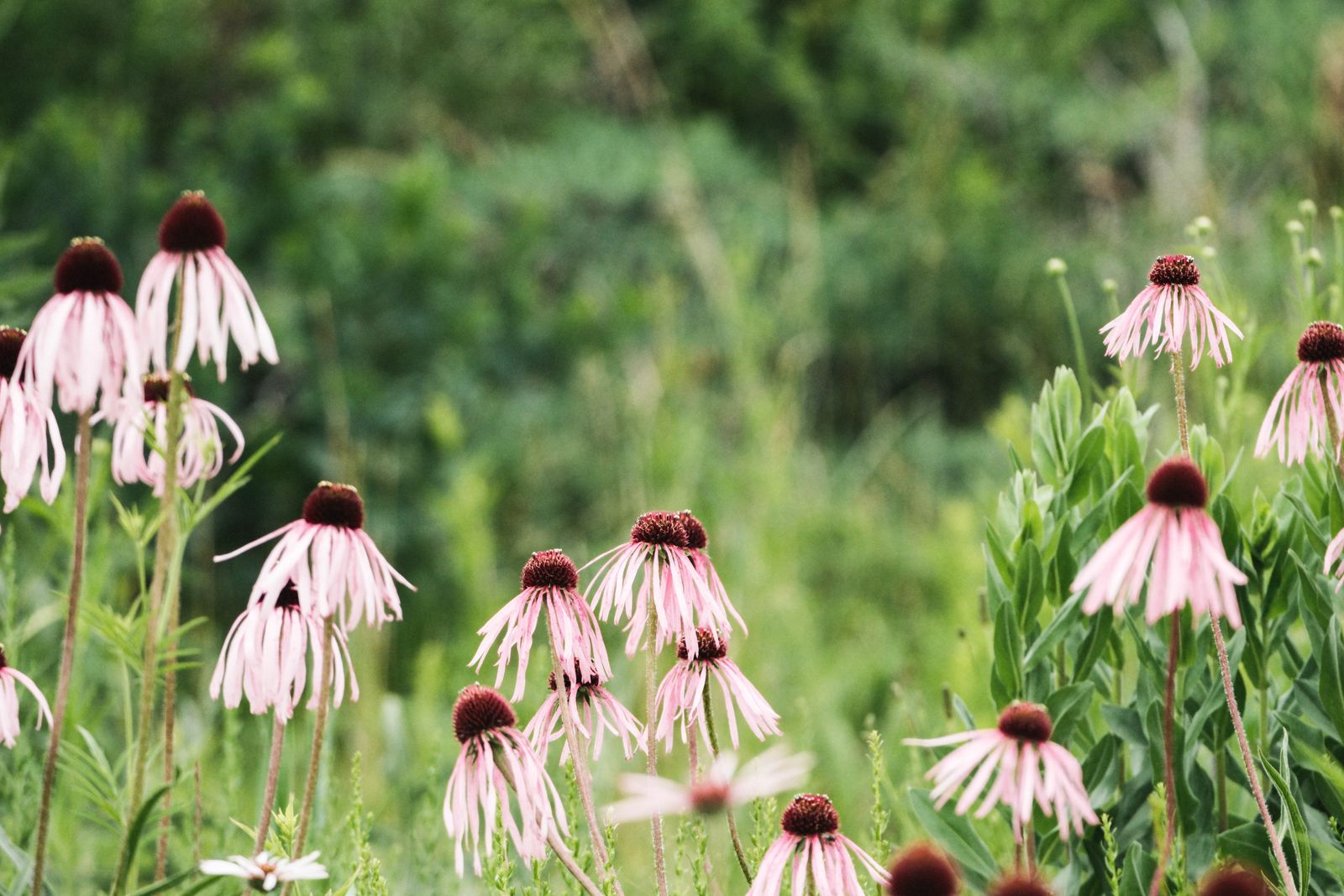
Native plant landscaping looks effortless in photos and can feel anything but when you’re standing in your own yard with a flat of little plants and no plan. The plants themselves aren’t the hard part — most regional natives are tougher and less fussy than the nursery annuals they replace. Design is where beginners get stuck: how do you arrange native plants so the bed reads as a garden instead of a weedy patch, and how do you pick species that will actually thrive where you live?
This guide covers five design rules that solve both problems. They come from landscape architecture research and native plant nurseries, not just aesthetics, so they hold up once the bed matures and not just on planting day.
Table of Contents
- 1. Match Plants to Your Site, Not the Other Way Around
- 2. Choose True Regional Natives
- 3. Design in Layers Like a Forest
- 4. Give the Bed a Tidy Edge
- 5. Start Small and Prep the Bed Right
- Straight Species vs. Nativars vs. Non-Native Ornamentals
- Frequently Asked Questions
- Final Thoughts
Key Takeaways
- Assess your site’s sun, soil, and moisture first, then pick plants suited to those conditions — not the other way around.
- “Native to North America” isn’t the same as native to your region; look for straight species sourced locally when you can.
- Layer plants the way a forest does: canopy, understory, shrubs, and groundcover, scaled down to yard size.
- A mowed strip or defined edge around a native bed reads as intentional design instead of neglect — this matters more than people expect.
- Start with one small bed, prep it properly, and expand in seasons two and three rather than converting the whole yard at once.
1. Match Plants to Your Site, Not the Other Way Around
Before you buy a single plant, walk your yard and note the real conditions: hours of direct sun, whether the soil is sandy, clay, or loamy, and whether water pools after rain or drains fast. Native plant landscaping design works because it matches species to a “plant community” — the conditions a plant evolved to handle — instead of forcing a woodland wildflower into a hot, dry, full-sun strip along the driveway.
This is the opposite of how most people shop for plants: picking something pretty first and hoping it survives. Start with the site, and the plant list gets a lot shorter and a lot more reliable.
2. Choose True Regional Natives
“Native” gets used loosely at big-box garden centers, where a plant tagged “native to North America” might actually be native to Florida wetlands and struggle badly in a Colorado front yard. Look for species native to your specific region or state, not the continent broadly.
Cultivars of native plants — sometimes called “nativars” — are another wrinkle. Trials at Mt. Cuba Center have found that when breeders change a flower’s shape, color, or bloom time, the resulting cultivar can support noticeably fewer pollinators than the straight species, even though it’s still technically the same plant. That doesn’t mean avoid cultivars entirely — some perform just as well ecologically — but when the goal is wildlife value, straight species sourced from a local or regional native plant nursery are the safer bet. Your state’s native plant society is usually the fastest way to find one near you.
3. Design in Layers Like a Forest
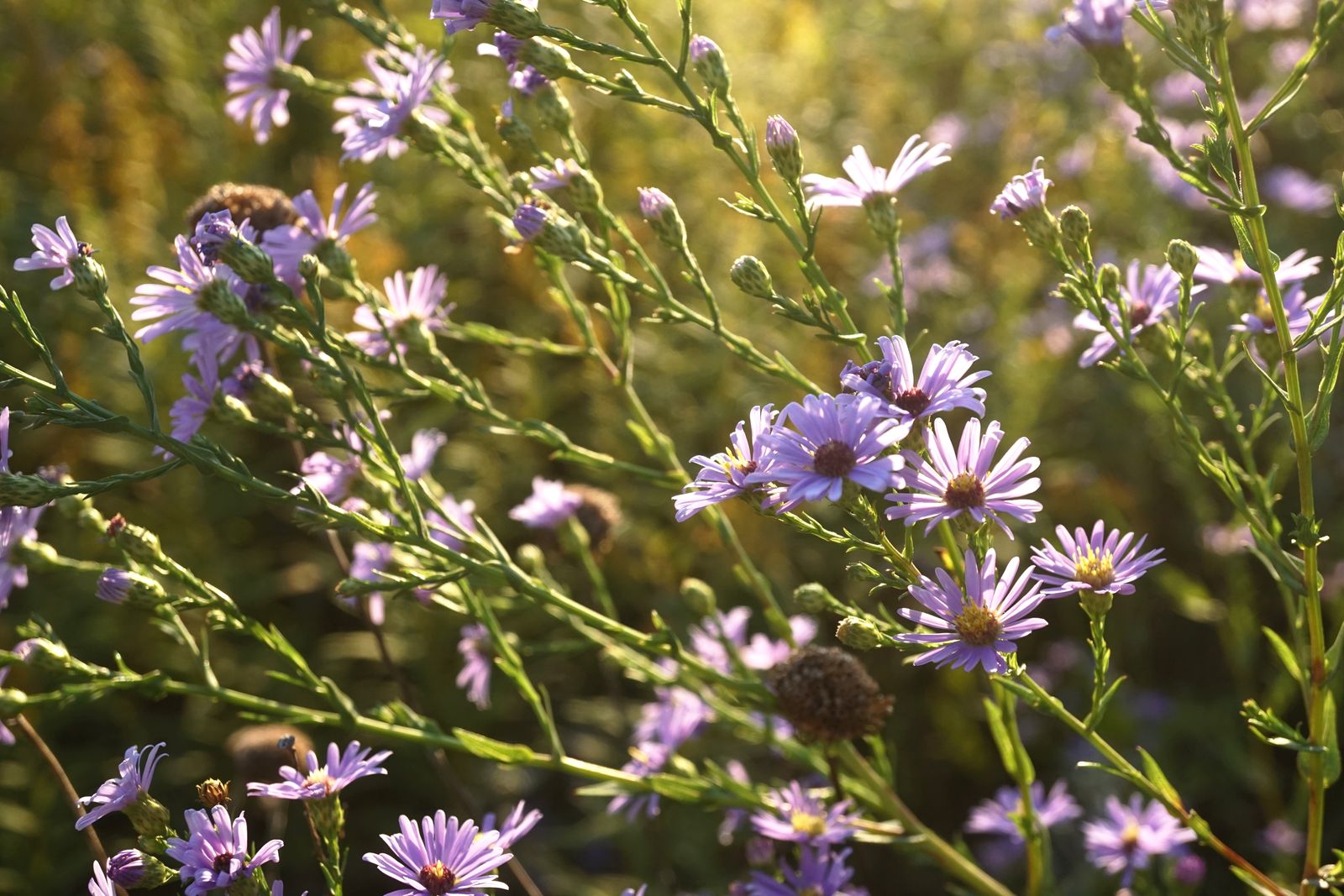
Untouched native landscapes aren’t flat — they’re layered, and copying that structure is what makes a native garden look designed instead of scattered. Wild Ones breaks the concept into four tiers you can scale down to yard size:
- Canopy — a shade tree, if you have room for one. Oaks are worth prioritizing here: a single native oak can host more than 500 species of caterpillars, which is exactly the kind of food web a bird-feeding backyard depends on.
- Understory — small flowering trees like serviceberry or redbud, or large shrubs, filling the space beneath the canopy.
- Shrub layer — the structural backbone that keeps the bed looking full even when perennials die back for winter.
- Groundcover and perennials — the layer that actually covers the soil, so weeds have nowhere to establish.
You don’t need all four layers in a small bed — a shrub-and-groundcover pairing is a complete, functional mini-version of the same idea. The National Wildlife Federation notes that just 14% of native plant species support 90% of caterpillar species, so even one or two well-chosen keystone plants in this layered structure do outsized ecological work.
4. Give the Bed a Tidy Edge
The single biggest reason native gardens get complaints from neighbors or HOAs isn’t the plants — it’s the absence of visual signals that someone is taking care of the space. Landscape researcher Joan Nassauer coined the term “cues to care” for the design signals — a mowed edge, a visible border, a clean line where bed meets lawn — that read as intentional maintenance rather than neglect, even when the planting itself is loose and naturalistic.
In practice, this is simple: edge the bed with a spade, steel edging, or a mowed strip of turf, and keep that line crisp. The plants inside can be as informal as you like once that frame is in place.
5. Start Small and Prep the Bed Right
Convert one bed before you convert the whole yard. A 10-by-10-foot area is enough to learn what works in your specific conditions without a costly do-over if something doesn’t establish. If you’re replacing turf to make room, our guide to no-grass front yard ideas covers smothering, sod-cutting, and solarizing — any of those methods works fine as prep for a native bed, since old turf grass will compete just as hard with natives as it would with anything else. If you’re working with a compact lot, our small backyard ideas guide covers the zoning and scale tricks that pair well with a single well-placed native bed.
Give new plantings a full season of regular watering while roots establish, even though the whole point of natives is that they’ll need little supplemental water once mature. Mulch bare soil between plants the first year or two to suppress weeds until the groundcover layer fills in and does that job on its own.
Straight Species vs. Nativars vs. Non-Native Ornamentals
| Option | Best for | Ecological value | Watch out for |
|---|---|---|---|
| Straight native species | Wildlife gardens, pollinator support, restoration-style plantings | Highest — evolved alongside local insects and birds | Can look less uniform than bred cultivars; sourcing takes more effort |
| Native cultivars (nativars) | Gardeners who want native structure with more predictable size or color | Varies by cultivar — some match the straight species, some fall short | Double-flowered or heavily bred forms often support fewer pollinators |
| Non-native ornamentals | Filling gaps, containers, spots where no native performs well | Lowest, though rarely harmful in small numbers | Some spread aggressively into wild areas; check invasive plant lists before buying |
Frequently Asked Questions
Is native plant landscaping really lower maintenance?
Yes, once established — usually after one to two growing seasons. Natives are adapted to your regional rainfall and soil, so they need less watering, fertilizing, and pest control than plants bred for a different climate.
Do I have to rip out my whole lawn to do this?
No. A single native bed, even a small one, adds real habitat value. Many homeowners convert one area at a time over several years rather than all at once.
What exactly is a nativar, and should I avoid them?
A nativar is a cultivated variety of a native species, selected or bred for a trait like flower color or plant size. They’re not inherently bad, but research shows some provide less pollinator value than the straight species — worth knowing if wildlife support is your main goal.
Will a native garden look messy?
Not if you frame it well. A defined edge, mowed border, or low fence around the planting reads as intentional design, even when the plants inside grow loosely.
Where do I actually buy true regional natives?
Start with your state or regional native plant society — most maintain nursery directories or host plant sales — rather than the native-labeled shelf at a general garden center, which often carries plants native to North America broadly but not to your area.
Final Thoughts
Native plant landscaping design comes down to reading your site honestly, choosing plants that actually belong there, and giving the bed enough visual structure that it looks like a choice rather than an accident. Start with one layered, well-edged bed, and let it prove itself before you expand. If you want to make that first bed pull double duty for pollinators, our guide on how to plant a pollinator garden pairs naturally with everything here, and if water use is also a priority, several of the same plant families show up in our xeriscaping ideas guide too.