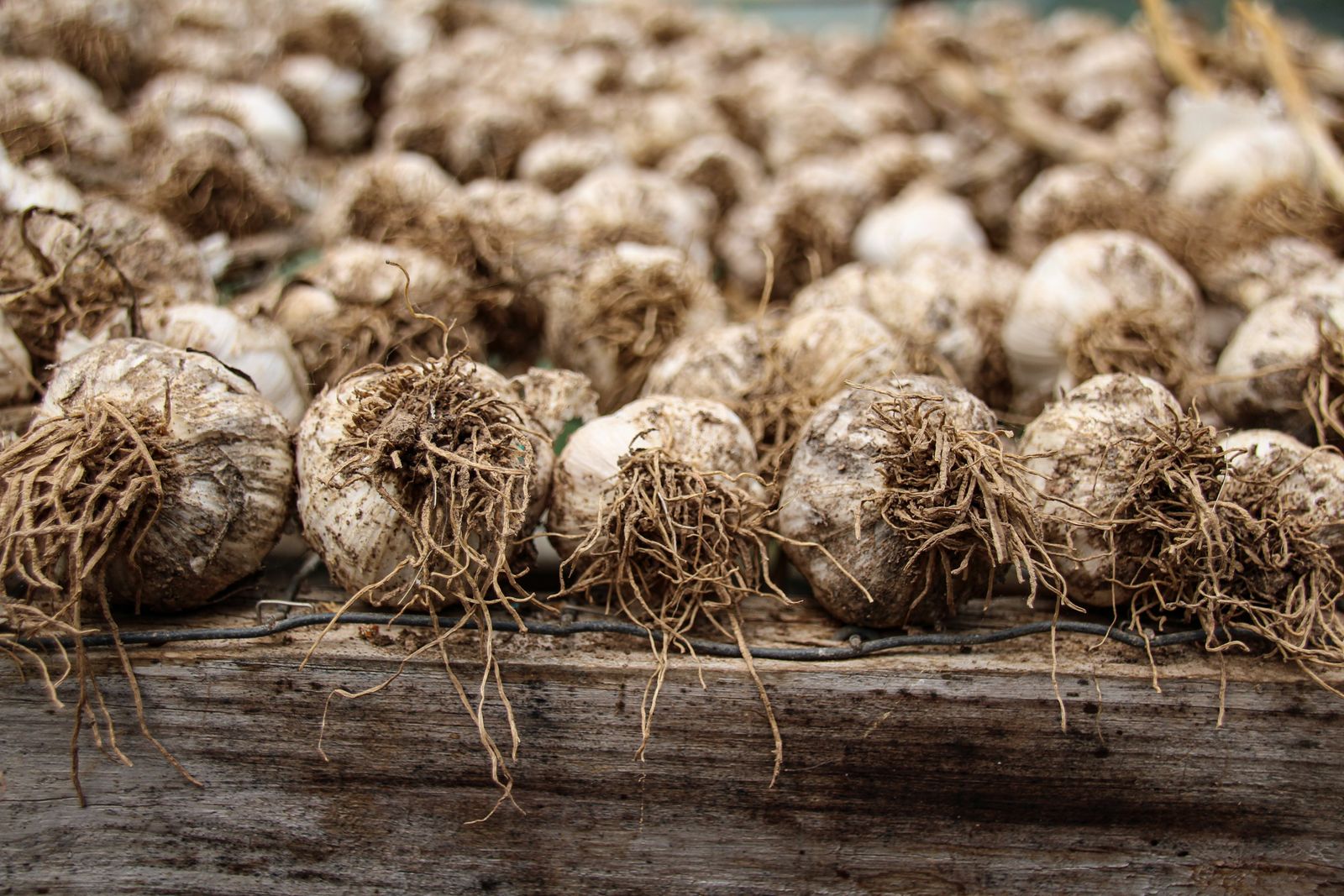
Garlic is the easiest crop you’ll ever plant and then forget about for months. You tuck the cloves into cool soil in fall, cover them with straw, and next summer you dig up full, papery bulbs. The only part that trips people up is timing, and knowing when to plant garlic comes down to one goal: roots in the ground before winter, but not much leafy growth above it.
That sweet spot shifts by more than two months between Minnesota and Florida, so a single “plant in October” rule doesn’t work. Below you’ll find a planting window for each USDA zone from 3 to 10, how to pick hardneck or softneck garlic for your climate, and exactly how deep, how far apart, and how thickly to mulch.
Table of Contents
- The Rule Behind Garlic Timing
- When to Plant Garlic by USDA Zone
- Hardneck vs. Softneck: Pick for Your Climate
- How to Plant Garlic Cloves
- Mulching and What to Expect Until Harvest
- Frequently Asked Questions
Key Takeaways
- In cold zones, plant garlic about 1–2 weeks after your first killing frost, or roughly 3 weeks before the ground freezes.
- In Zones 9–10, wait until soil at 2 inches deep drops below 85°F, usually late October through December.
- Choose hardneck garlic for cold winters and softneck garlic for mild ones.
- Set cloves pointy end up, about 2 inches deep and 4–6 inches apart, and skip grocery-store bulbs.
- Mulch cold-zone beds with 4–6 inches of straw; warm-zone beds only need 2–3 inches.
The Rule Behind Garlic Timing
Garlic needs a cold spell to form a proper bulb. University of Arizona Extension notes that cloves need 4 to 6 weeks of cool weather below 40°F after planting, and Texas A&M puts it at 6 to 8 weeks. Fall planting delivers that chill naturally while the roots grow underground.
In cold climates, Extension guidance lines up around your first frost and your soil freeze:
- UW–Madison Extension says to plant within a week or two after the first killing frost, so roots develop but shoots don’t break the surface before the hard freeze.
- Penn State Extension recommends planting a good three weeks before the ground freezes.
- South Dakota State Extension uses soil temperature instead: about 50°F at 4 inches deep is ideal.
In warm climates, the question flips. Texas A&M AgriLife lists the optimum planting time as when soil at 2 inches stays below 85°F.
One important caveat: your USDA Plant Hardiness Zone is based on average winter low temperatures, not frost dates. It puts you in the right neighborhood, but your actual first freeze can shift by weeks with elevation and nearby water, as NOAA’s first-freeze climate data shows. If you haven’t looked up your frost date yet, our guide to fall vegetables by zone walks through how to find it.
When to Plant Garlic by USDA Zone
Use this table as a starting point, then fine-tune it with your local frost date.
| USDA Zone | Typical Planting Window | Best Garlic Type | Timing Cue |
|---|---|---|---|
| 3–4 | Late September to mid-October | Hardneck | 1–2 weeks after first killing frost |
| 5 | Early to late October | Hardneck | Soil near 50°F at 4 inches |
| 6 | Mid-October to early November | Hardneck or softneck | About 3 weeks before ground freezes |
| 7 | Mid-October to mid-November | Hardneck or softneck | After the first frost, before steady freezes |
| 8 | Late October to late November | Mostly softneck | Once nights cool consistently |
| 9–10 | Late October to December | Softneck | Soil below 85°F at 2 inches |
How that plays out by region:
- Midwest: Iowa State Extension plants from October to early November.
- Mid-Atlantic and Northeast: University of Maryland Extension targets mid- to late October. If allium leafminer has shown up in your area, Penn State suggests planting later, around November 1 in southeastern Pennsylvania, so the fall flies find little foliage to lay eggs in.
- South: University of Georgia Extension plants from late September through November, and UF/IFAS recommends late fall through early winter in Florida.
- West: Utah State Extension plants from late September to November. Elevation matters a lot out here, so a high-desert garden may run weeks ahead of a low-desert one in the same state.
A Note on Chilling Cloves in the Fridge
You’ll see advice to refrigerate cloves before planting in Zones 9–10. Be careful with it. Texas A&M notes that holding garlic at 40–50°F triggers rapid sprouting, and prolonged storage at 40°F can cause rough bulbs and early maturity. Choosing a softneck variety bred for mild winters is the more reliable fix.
Hardneck vs. Softneck: Pick for Your Climate
Choosing the right type matters as much as the date. UC Master Gardeners point out that hardneck garlic needs 4–6 weeks below 40–45°F to form a strong bulb, while softneck is better suited to warm climates.
| Type | Best For | Cloves Per Bulb | Storage | Watch Out For |
|---|---|---|---|---|
| Hardneck | Zones 3–6, cold winters | 4–12 large cloves in one ring | Shorter shelf life | Needs a real winter; sends up a scape you’ll snap off |
| Softneck | Zones 7–10, mild winters | 10–40 smaller cloves | 6–9 months; braidable | Small inner cloves; less cold-hardy |
Storage and clove counts come from UW–Madison. In Florida, UF/IFAS suggests softneck varieties like ‘Artichoke’ or ‘Creole’. For hardnecks, University of Arizona Extension suggests trying varieties like ‘German Red’, ‘Spanish Roja’, or ‘Carpathian’.
How to Plant Garlic Cloves
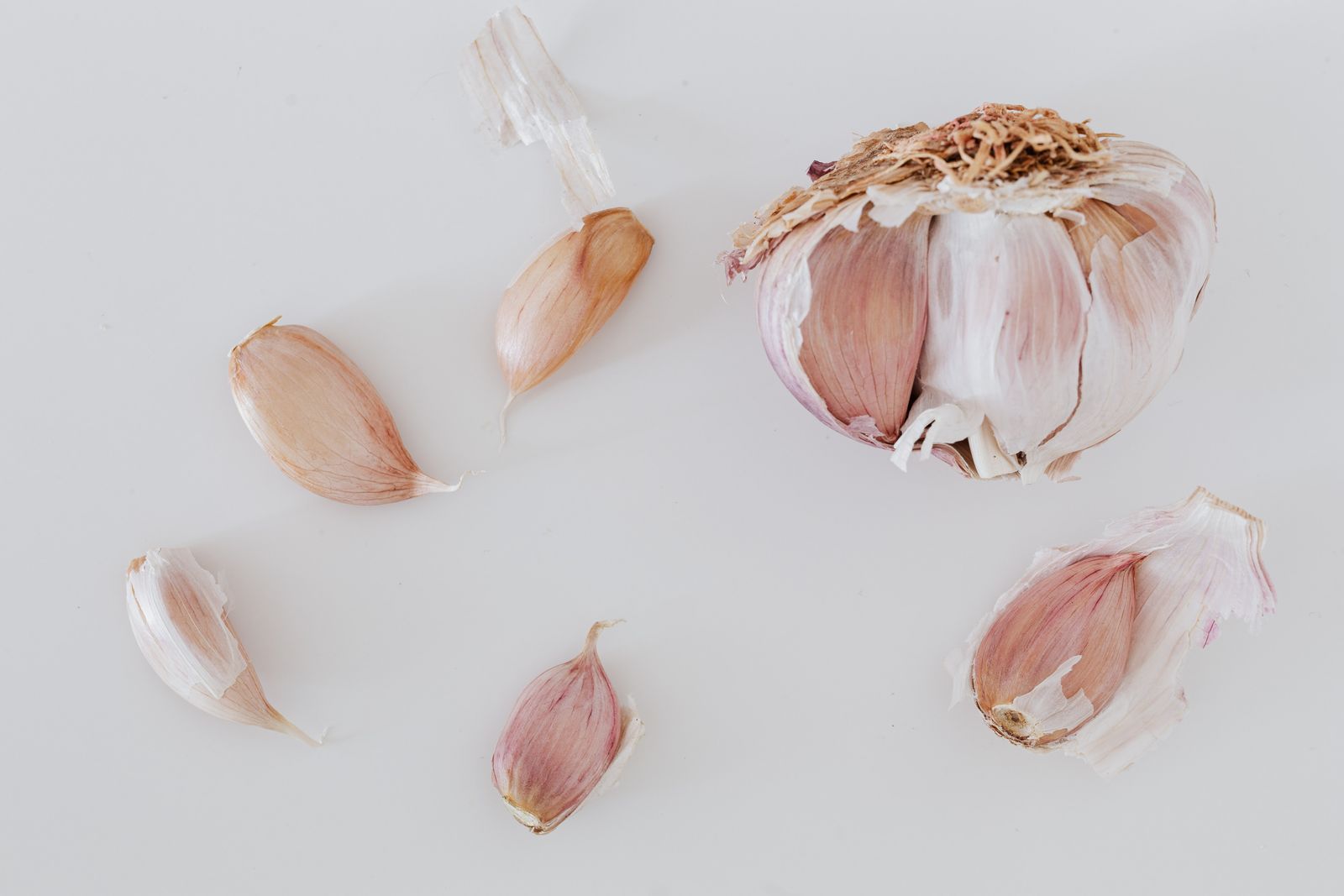
Start with seed garlic from a garden center or mail-order supplier. Both Penn State and University of Maryland warn against grocery-store garlic, which may be a variety unsuited to your area and is often treated to extend shelf life.
- Prep the bed. Garlic wants full sun and loose, well-drained soil. A raised bed filled with a good raised bed soil mix is close to ideal.
- Rotate. Texas A&M advises against following onions with garlic. If you’re sketching out next year’s beds, our vegetable garden layout for beginners covers simple crop rotation.
- Break the bulb. Separate cloves and plant them the same day, keeping the papery skin on. Plant the biggest ones, since Iowa State found the largest cloves give the highest yields.
- Plant pointy end up. Set cloves about 2 inches deep in cold zones (UW–Madison says 2–3 inches) and 1–2 inches deep in the South.
- Space them out. Leave 4–6 inches between cloves and about 12 inches between rows. A hand trowel or hori-hori knife makes quick work of it.
- Water in so soil settles around each clove.
For a quick estimate, a 4×8 raised bed planted on a 6-inch grid holds about 128 cloves.
Mulching and What to Expect Until Harvest
Mulch is what gets fall-planted garlic through winter. In cold zones, Iowa State recommends 4 to 6 inches of weed-free straw in November, and South Dakota State suggests waiting until the soil has started to freeze. The mulch evens out soil temperatures and prevents freeze-thaw heaving. In warmer zones, UGA suggests just 2 to 3 inches, kept a couple of inches away from the stems.
Here’s the timeline once the cloves are in:
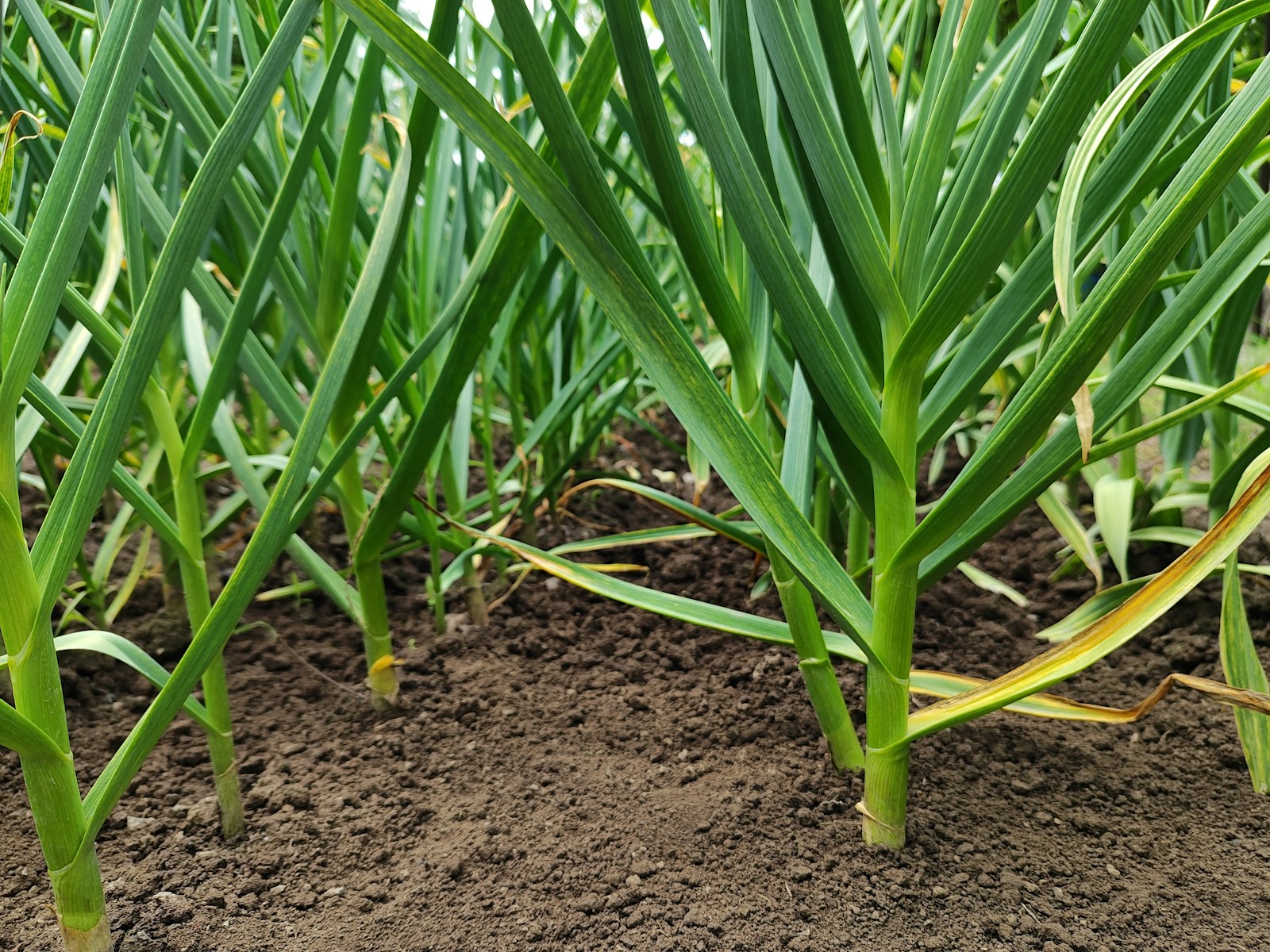
- Fall and winter: Roots grow underground. In cold zones, you usually won’t see leaves until spring.
- Early spring: Pull the straw back between rows so new shoots can come through.
- Late spring: Hardneck types send up curly scapes. Snap them off to push energy into the bulb.
- Summer: Harvest when about half the leaves have turned brown. That’s typically late May to mid-July in Georgia, around July 1 in central Maryland, and July or August in Iowa.
- Curing: Dry bulbs in a shady, well-ventilated spot for 2 to 4 weeks until the necks are dry and the skins are papery.
Frequently Asked Questions
Is it too late to plant garlic in November?
Often not. If you can still work the soil and get cloves in a few weeks before it freezes solid, go for it and mulch well. In Zones 7–10, November is right in the normal window.
Can I plant garlic from the grocery store?
It’s not recommended. Penn State Extension notes that store garlic may be a variety that won’t do well in your area, and much of it is treated to last longer on the shelf, making it harder to grow.
My garlic sprouted before winter. Is that a problem?
A few inches of green after a warm fall is common. Ideally, cold-zone shoots stay below the soil until spring, so add a thick layer of straw to protect the plants.
Can I plant garlic in spring instead?
You can, but fall is better. Garlic needs weeks of cold to form a full bulb, so spring-planted cloves often produce smaller, less divided bulbs.
Final Thoughts
Garlic turns one afternoon of fall planting into one of the most satisfying harvests of the year. Check your frost date, pick the right type for your winters, and get those cloves in. If you’ve got bed space left, our fall vegetables by zone guide shows what else can go in alongside your garlic, and the full Vegetable Garden category has everything you need for next season.